Why Sport Hijabs Slip During Training and What Actually Holds
Quick Answer: Sport hijabs slip mostly because of what is underneath them, not the hijab itself. Smooth hair, silky undercaps, and sweat all reduce friction against the fabric. The reliable fixes are a cotton or bamboo undercap for grip, securing hair in a low bun or braid rather than a high ponytail, and choosing a two-piece or instant style with a fitted band rather than a wrap that relies on tension alone.
Most advice on this jumps straight to buying a different hijab. Before spending anything, change the layer underneath and where your hair sits — those two adjustments solve the majority of slipping complaints.
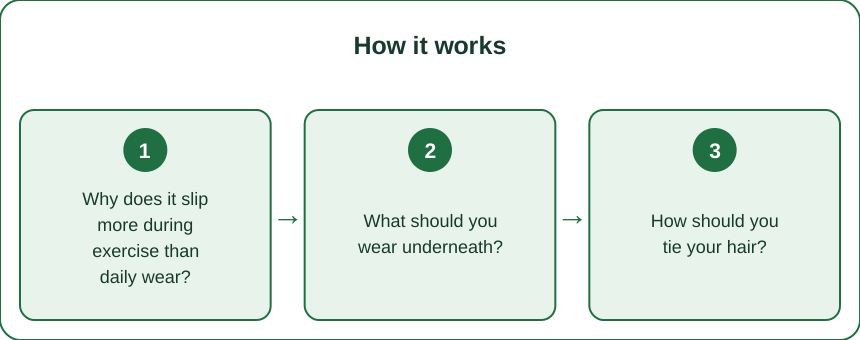
Why does it slip more during exercise than daily wear?
Three things change once you start moving.
Friction drops as you sweat. Moisture between the head and the fabric acts as a lubricant. A hijab that sits perfectly for six hours at a desk starts drifting within fifteen minutes of a raised heart rate, and the smoother the base layer, the faster it goes.
Repeated head movement adds up. Every rotation, every jump, every time you look down and back up applies a small displacing force. Daily wear involves relatively little of that; a training session involves hundreds of small movements in the same direction.
Hair moves inside the covering. A ponytail that shifts pulls the fabric with it. This is the single most underestimated cause, and it explains why the same hijab behaves differently on different days depending on how you tied your hair that morning.
The combination means the hijab is being asked to grip a surface that gets progressively slipperier while being pushed hundreds of times. No fabric solves that on its own.
What should you wear underneath?
A cotton or bamboo undercap, and this is the highest-impact change available.
Satin and silk undercaps are wonderful for hair health and terrible for grip. They are engineered to reduce friction, which is exactly the property you do not want during training. Save them for sleeping.
A fitted cotton or bamboo-blend undercap gives the outer layer something textured to hold. This single swap resolves slipping for most people, and undercaps run $6 to $15.
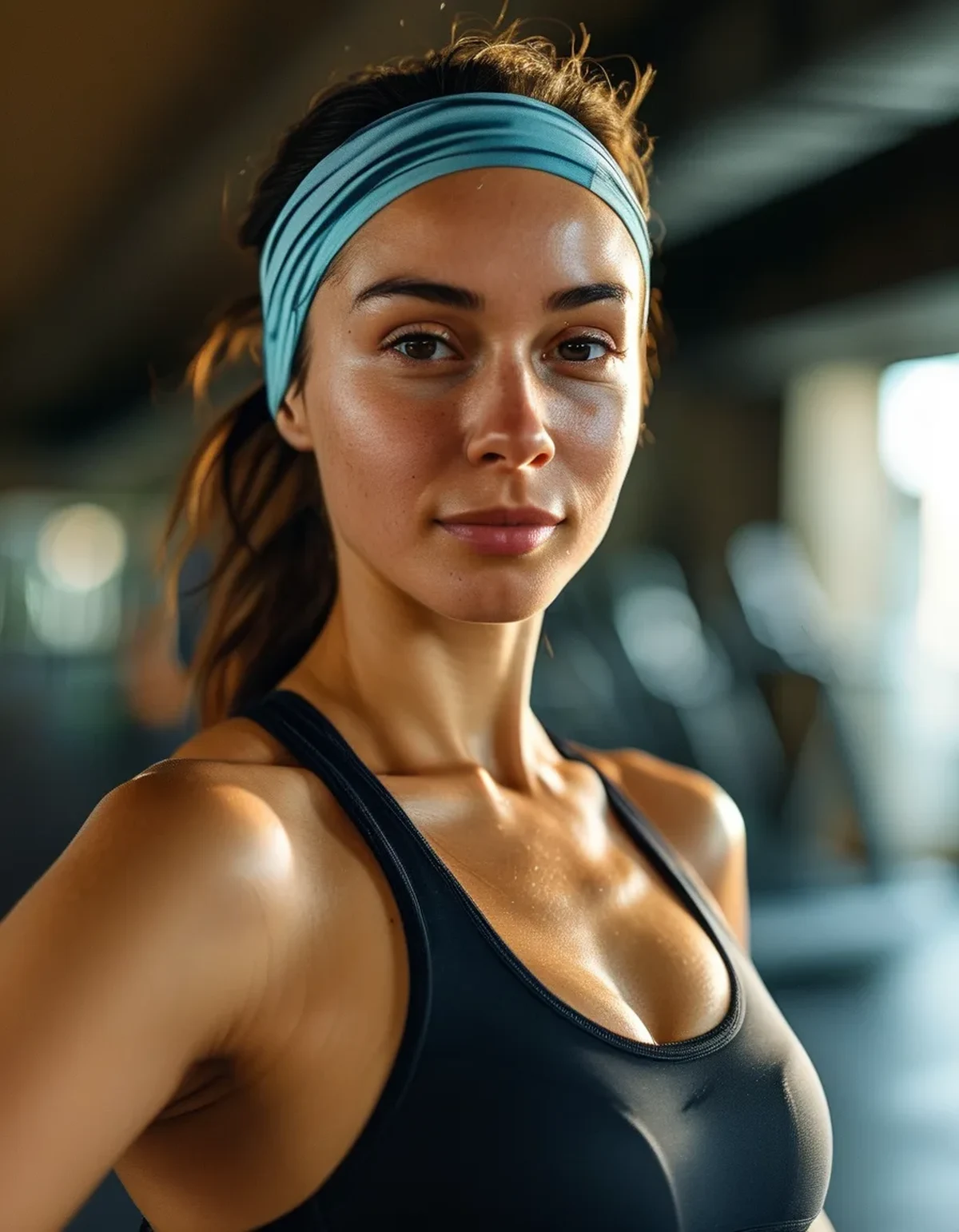
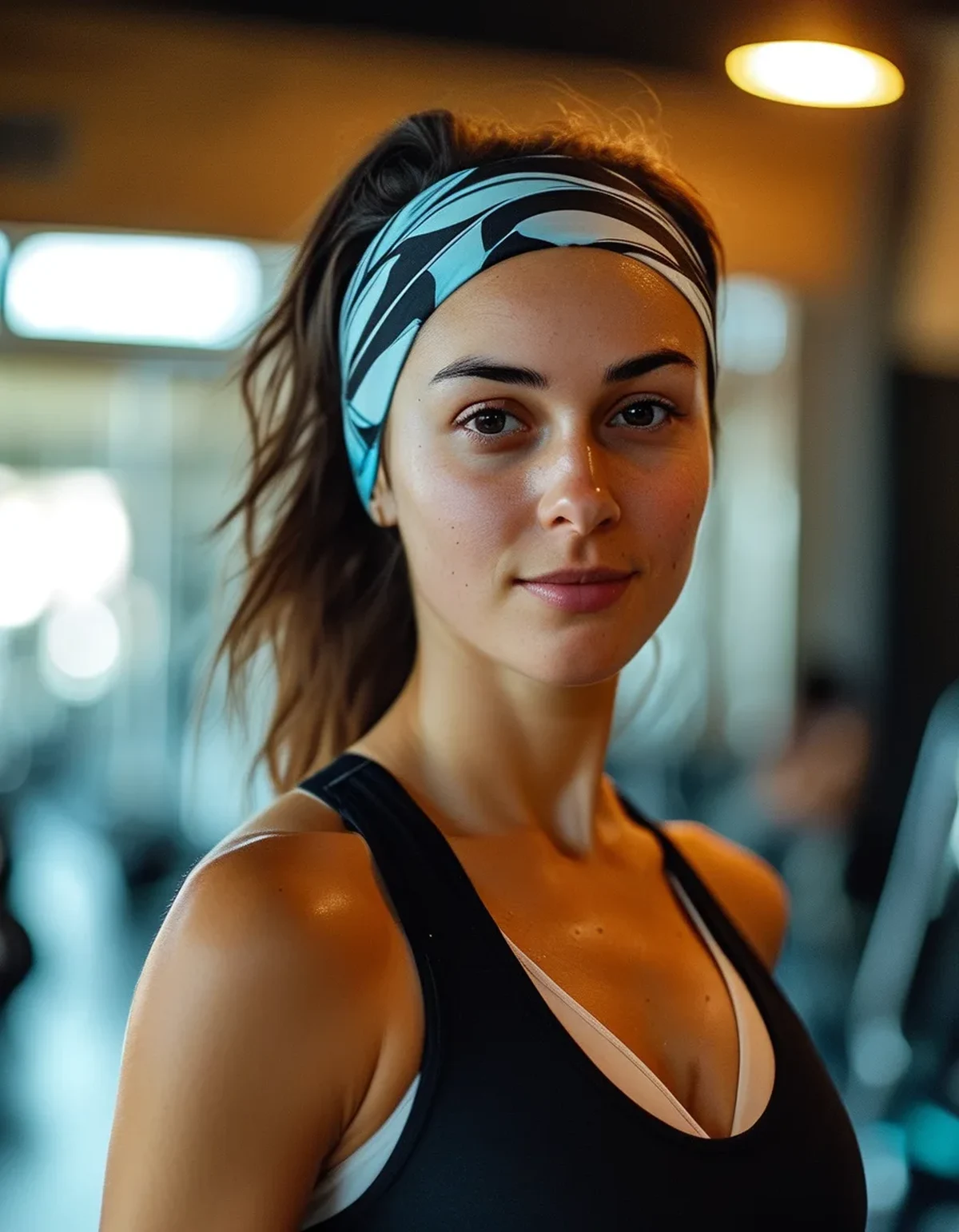
A wide non-slip headband worn at the hairline underneath works similarly and adds a second benefit — it absorbs the sweat that would otherwise reach the outer fabric. Velvet-lined headbands grip particularly well.
For high-intensity training, some people layer both: headband at the hairline, undercap over it. That sounds warm and it is, so it suits cooler weather better than a hot studio in August.
Avoid anything with a smooth synthetic finish directly against the head. If the material feels slippery in your hand, it will behave that way in motion.
How should you tie your hair?
Low and flat, always.
A low bun at the nape or a low braid keeps the mass close to the head and centered, which means the hijab has a stable shape to sit on. Nothing shifts, so nothing pulls.
A high ponytail or top bun does the opposite. It creates a fulcrum, and every time you move your head the weight swings and drags the fabric with it. It also creates a bump that the outer layer slides off.
For very long or heavy hair, a low double braid distributes weight evenly across both sides and prevents the sideways drift that a single braid can cause during running.
Secure with a fabric-covered elastic rather than a smooth plastic one — the same friction principle applies. Everything under the hijab should be textured, and everything should sit low.
If your hair is short or fine, the opposite problem appears: there is not enough bulk for the hijab to grip. A small undercap solves this by creating a consistent surface, and a light texturizing product at the roots gives a bit of grip if you prefer no undercap.
What Nobody Tells You About Sport Hijab Styles
The style matters more than the fabric brand, and the marketing rarely explains the difference.
Instant or slip-on styles — a fitted tube you pull over the head — hold best for high-impact activity. There is nothing to unravel because there is no wrapping. The trade-off is fit precision: too loose and it shifts as a whole unit, so sizing matters more than with a wrap.
Two-piece styles with a separate fitted band plus a draped outer layer are the best compromise for most training. The band does the securing and the outer layer does the covering.
Wrap styles rely entirely on tension and pins. They look excellent and they are the least stable in motion. Fine for walking or light strength work, frustrating for running or classes.
One detail nobody mentions: hijabs designed for swimming behave very differently on land. Swim fabrics are engineered to shed water and are extremely smooth, which makes them slip badly during dry training even though they perform perfectly in a pool.
And on fabric weight — heavier is not more stable. A heavy jersey drags downward under gravity and sweat weight. A light, slightly textured performance knit stays put better and dries faster.
How does this change as the seasons shift?
Late summer is the hardest period and the next six weeks bring relief.
High heat means maximum sweat, which means minimum friction. If you are struggling right now, some of that is genuinely seasonal — the same setup will behave noticeably better in October.
That said, cooler weather introduces a different problem: static. Dry autumn air makes synthetic hijab fabrics cling and creep, and the fabric starts riding up rather than sliding down. A light leave-in conditioner or an anti-static spray on the inside of the fabric handles it.
Outdoor training adds wind, which pushes from a direction indoor training never does. For running outdoors in the fall, a slip-on style with a tucked-in tail is far more secure than any draped layer.
Layering also changes the picture. A jacket collar or hooded layer creates a friction point at the back of the neck that gradually pulls the hijab backward over a long session. Tucking the back of the hijab into the collar rather than over it prevents the drag entirely.
FAQ: Sport Hijab Questions, Answered
How often should I wash a sport hijab?
After every training session, the same as any other performance garment. Sweat degrades elastic fibers and the residue reduces grip over time. Wash cold, skip fabric softener — softener coats fibers and makes slipping worse — and air dry.
Are pins safe during exercise?
Standard straight pins are not ideal for high-impact activity. Magnetic hijab pins or a fitted band avoid the risk entirely and hold as well or better. If you use pins, place them where a fall would not drive them toward the neck.
Why does my hijab feel tighter as the session goes on?
Usually fabric shrinking slightly as it absorbs sweat, combined with the natural creep of a wrapped style tightening as it settles. A slip-on style with a bit of stretch avoids this. If you get headaches during training, the band is too tight — this is common and easily fixed by going up a size.
TL;DR:
- Slipping is a friction problem: sweat, smooth undercaps, and moving hair all reduce grip.
- A cotton or bamboo undercap instead of satin is the single most effective fix, and it costs under $15.
- Keep hair low and flat — a low bun or braid, never a high ponytail.
- Slip-on and two-piece styles hold far better than wraps for anything high-impact.
Try the undercap-and-low-bun combination at your next session before buying a different hijab. Most people find the hijab they already own was never the problem.
See It in Motion
Seen here: High Waist Drawstring Wide Leg Yoga Pants with Pockets — shop it on bubblelime.com
Keep Reading
This article is for general informational and styling purposes only. Fit, sizing, and product availability may vary.