Why Modest Activewear Costs More, and What Justifies It
Quick Answer: Modest activewear typically costs 20 to 40 percent more than conventional equivalents, and roughly half of that is real: more fabric, more panels, more construction steps, and smaller production runs. The other half is a smaller market absorbing fixed costs across fewer units. Worth paying for: fabric weight, seam construction, and gusseted or raglan sleeves. Not worth paying for: brand positioning, decorative detail, and anything described only as modest without a technical spec.
You compare a modest long-sleeve top with a conventional one from the same category, and it is fifteen dollars more.
Some of that is fabric. Some of it is not, and it is worth knowing which is which before you decide.
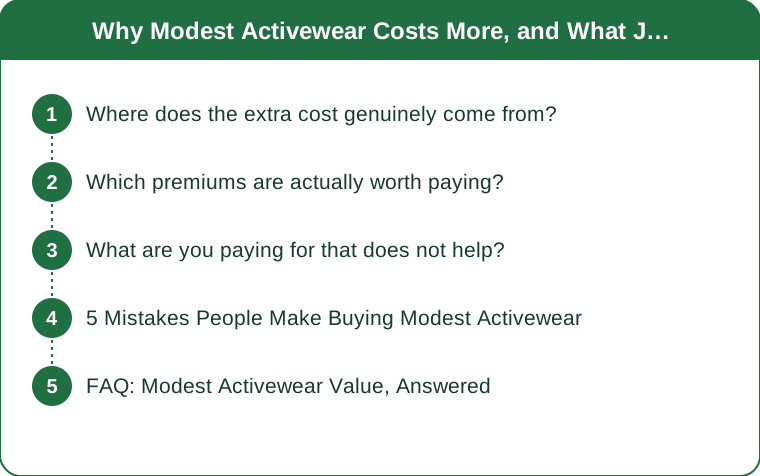
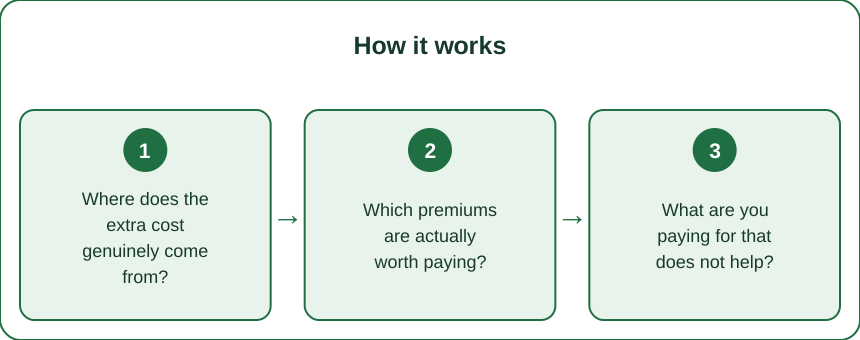
Where does the extra cost genuinely come from?
Four real factors, in roughly descending order of contribution.
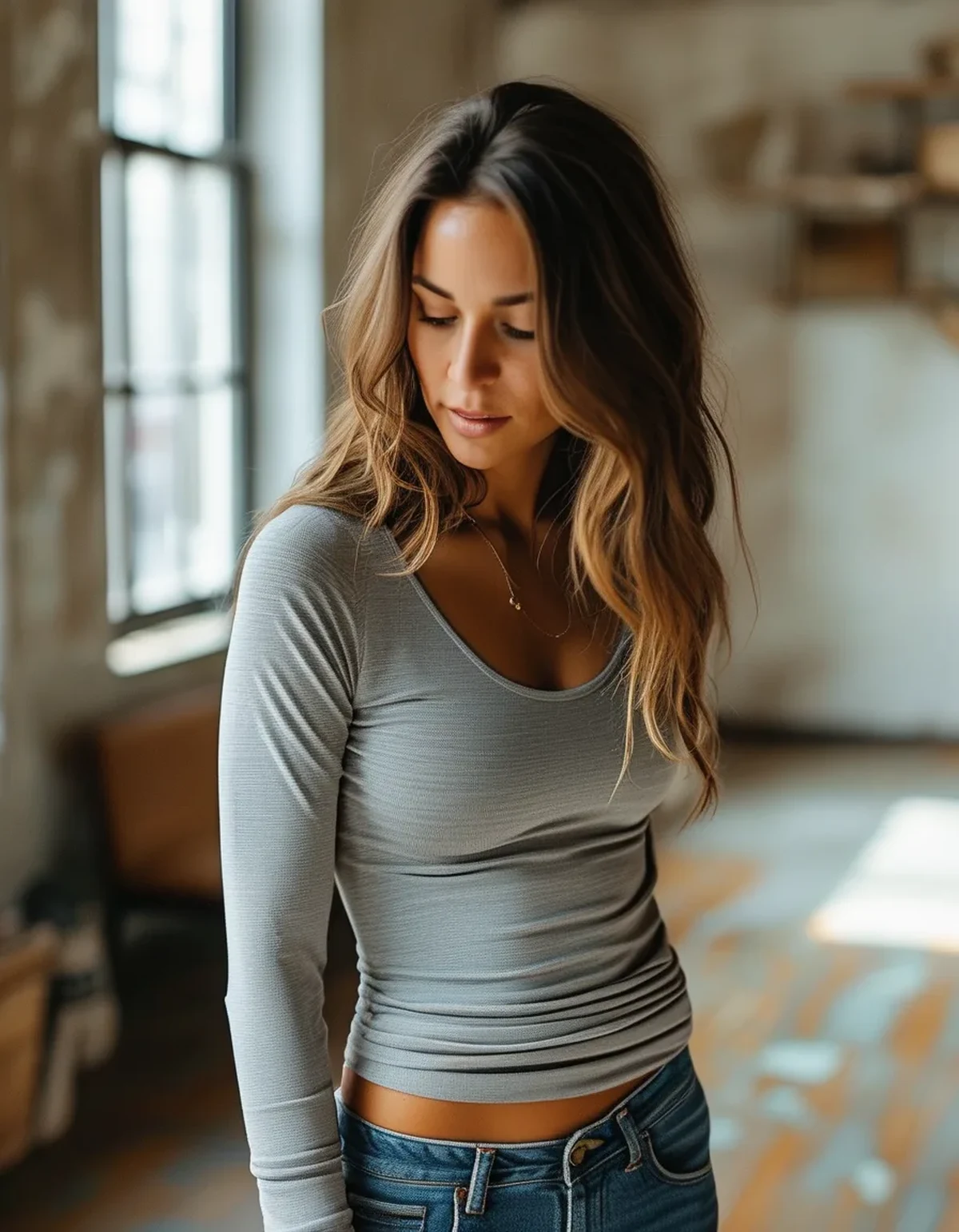
1. Fabric quantity. A long-sleeve top uses roughly 40 to 60 percent more fabric than a short-sleeve one. Full-length leggings versus cropped, a longline tunic versus a standard top, a swim set with a skirt panel — the differences add up. On technical fabrics running 15 to 30 dollars a metre wholesale, this is real money.
2. Construction complexity. More panels means more seams, and every seam is a machine operation. A modest swim set can have twice the seam count of a conventional one. Labour is the largest single line in most garment costing, so seam count matters more than fabric for many items.
3. Smaller production runs. Modest ranges are produced in lower volumes, which raises per-unit cost across pattern making, sampling, grading, and minimum fabric orders. This is invisible and substantial — a run of 500 units carries the same development cost as a run of 50,000.
4. Technical requirements the category creates. Covering more of the body while remaining breathable requires better fabric, not just more of it. A cheap fabric across more surface area produces a garment that genuinely does not work.
Taken together, a 20 to 25 percent premium is defensible on cost grounds. Beyond that, you are into positioning.
Which premiums are actually worth paying?
Fabric weight and moisture behaviour first, then construction, then fit engineering.
Worth it: fabric weight and technical spec. This is the single most important variable in modest activewear, because the whole category’s failure mode is overheating. A lightweight, high-wicking fabric across full coverage performs; a heavy cotton-blend across full coverage traps heat. Look for stated fabric weight in gsm and a named moisture management technology. Under about 200gsm for a top is the range you want.
Worth it: flatlock or bonded seams. More seams mean more chafing opportunities, and the seam type decides whether that matters. Flatlock seams sit flat against the skin; standard overlocked seams create a ridge. On a garment with twice the seam count, this is not a detail.
Worth it: raglan or gusseted sleeve construction. Modest tops fail most often at overhead range of motion. Raglan sleeves and underarm gussets solve it structurally, and they cost more to make.
Worth it: a proper thumbhole or cuff that stays put. Small, and it is the difference between a sleeve that works during training and one that rides up constantly.
Worth it once: a swim garment with a proper chlorine-resistant fabric, since modest swimwear has more fabric to degrade and replacing it is expensive.
What are you paying for that does not help?
Positioning, decoration, and vagueness.
Brand positioning. Some modest-specific brands price at a premium that reflects a captive market rather than a better product. A conventional brand’s long-sleeve technical top is often the same garment for less, and it is worth checking mainstream ranges before assuming you need a specialist one.
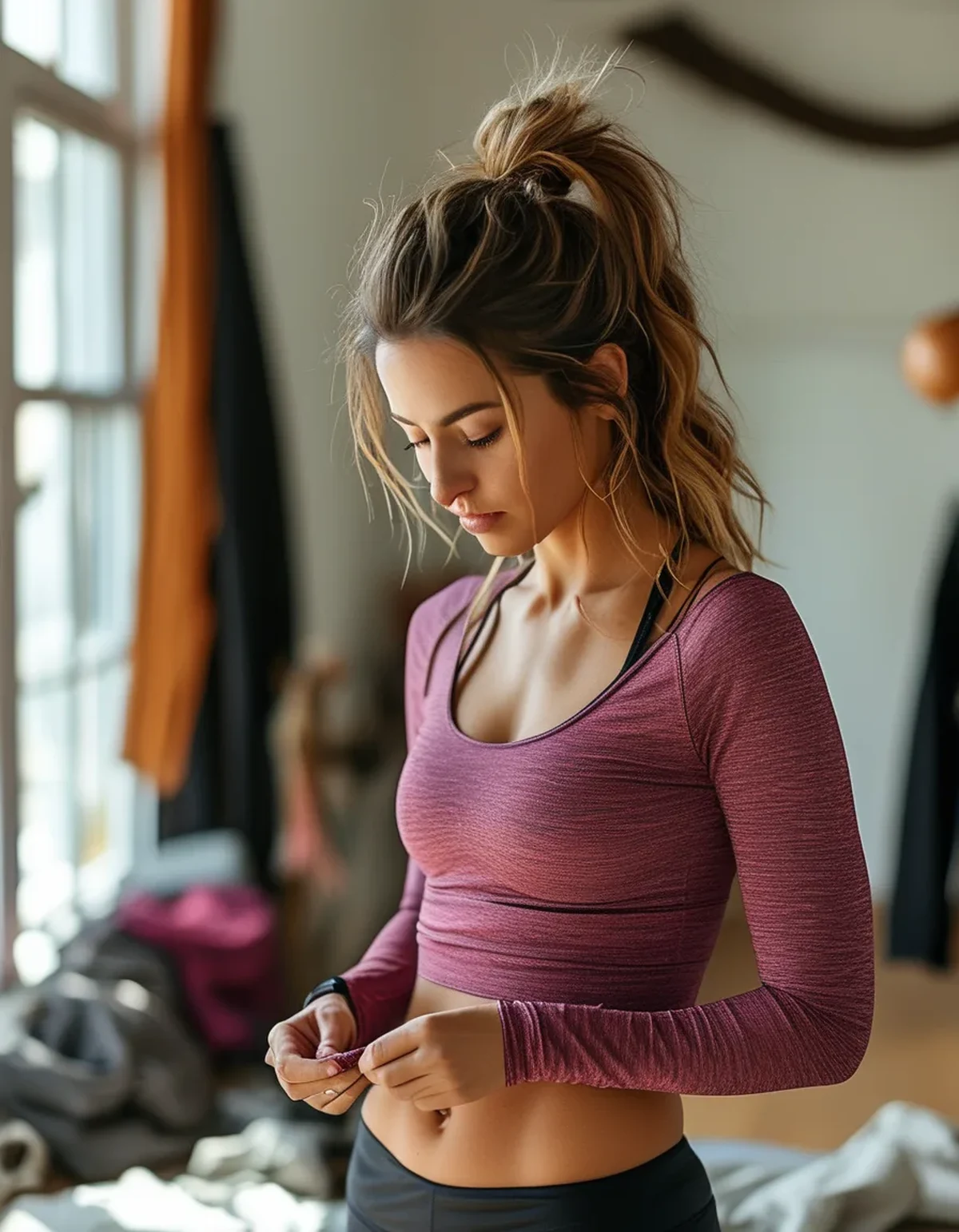
Decorative detail. Contrast panels, printed trims, and design features that add seams without adding function. On a garment already carrying a high seam count, decorative seams cost you money and add chafing points.
Anything sold on the word modest without a spec. If a product page describes coverage and does not state fabric composition, weight, or moisture properties, you are buying a shape rather than a garment. The technical spec is what determines whether it works, and its absence is informative.
Layering sets sold as one product. Two thin pieces sold together frequently cost more than buying a good base layer and a good top separately, and perform worse because neither piece was optimised.
Excessive lining. Lining is necessary for opacity in some fabrics and is often used to compensate for fabric that is too thin. A good single-layer opaque fabric beats a thin lined one on both breathability and price, and it lasts longer.
5 Mistakes People Make Buying Modest Activewear
Mistake 1: Buying by coverage alone. Coverage is the requirement, not the specification. Two garments with identical coverage can perform completely differently, and the fabric decides which.
Mistake 2: Sizing up for modesty. A looser garment does not cover better during movement — it shifts more. A correctly fitted garment with a good cut stays put, and an oversized one rides, drapes, and catches.
Mistake 3: Ignoring the neckline construction. Necklines that shift during overhead movement are the most common complaint in the category, and it is a cut issue rather than a size issue. Look for a higher-set, structured neckline rather than a wide one you have to keep adjusting.
Mistake 4: Buying the whole wardrobe from one brand. Fit and fabric quality vary enormously between brands even at similar prices. Buy one item, train in it three times, then decide.
Mistake 5: Treating cost per garment as the number that matters. A 70-dollar top worn 200 times costs 35 cents a wear. A 40-dollar top that overheats and stays in the drawer costs 40 dollars. In a category where performance failure means non-use, durability and comfort are the real economics.
FAQ: Modest Activewear Value, Answered
Is a mainstream brand’s long-sleeve range a reasonable substitute?
Often yes, particularly for tops and leggings. The gaps tend to be in swimwear, sport hijabs, and longline pieces designed to stay put during movement, where specialist construction genuinely matters.
How much should a good modest long-sleeve top cost?
Typically 45 to 75 dollars for something with a proper technical spec and flatlock seams. Below 35 you are usually getting heavier, less breathable fabric; above 90 you are usually paying for brand.
Does more expensive mean cooler in hot weather?
Not automatically, but the correlation is real, because fabric weight and moisture management are where the money goes on well-made items. Check the gsm rather than the price.
What should I buy first if I am building from nothing?
One excellent long-sleeve top and one pair of full-length leggings in a light technical fabric. Those two cover most training situations, and buying quality there tells you what you actually need next.
TL;DR:
- Modest activewear costs 20 to 40 percent more; roughly half is real cost from fabric, seam count, and small production runs.
- Worth paying for: light technical fabric with a stated gsm, flatlock seams, raglan or gusseted sleeves.
- Not worth paying for: decorative seams, unspecified modest branding, excessive lining, and bundled layering sets.
- Cost per wear is the number that matters in a category where a garment that overheats simply does not get used.
Before your next purchase, look for the fabric weight on the product page. If it is not stated, that absence tells you more about the garment than the price does.
See It in Motion
Seen here: High Waist 8” Yoga Shorts — shop similar styles on bubblelime.com
Keep Reading
This article is for general informational and styling purposes only. Fit, sizing, and product availability may vary.