Why Modest Activewear Rides Up Mid-Workout - and the Construction Details That Actually Stop It
Quick Answer: Tops ride up because fabric follows the largest movement in the garment, and a loose tunic over slick leggings has nothing to grip. Three construction details stop it: a slightly longer back hem than front, a side slit or vent that lets the hem move instead of climbing, and a matte-faced legging fabric that creates friction rather than sliding. Length alone does not fix riding up - it just gives it further to travel.
The other half is the layer underneath, which people rarely consider part of the problem.
Once you know the four features to look for, the constant adjusting mostly ends.
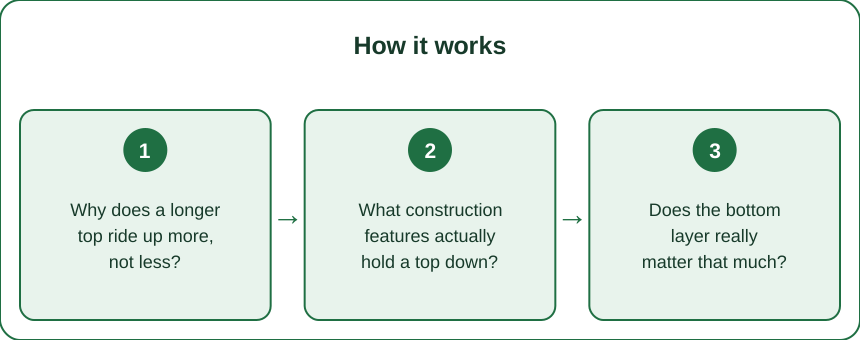
Why does a longer top ride up more, not less?
It comes down to what the fabric is doing when you move.
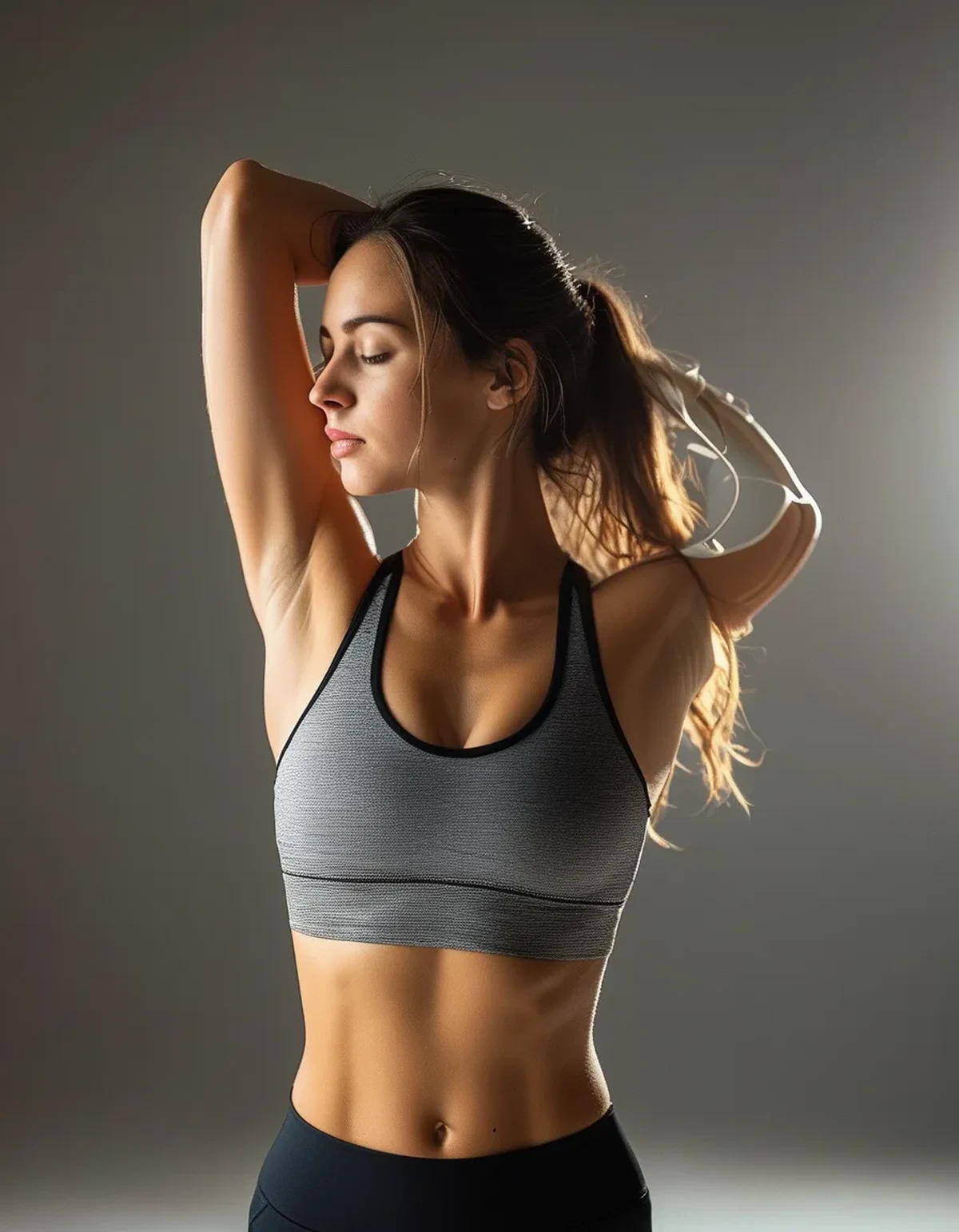
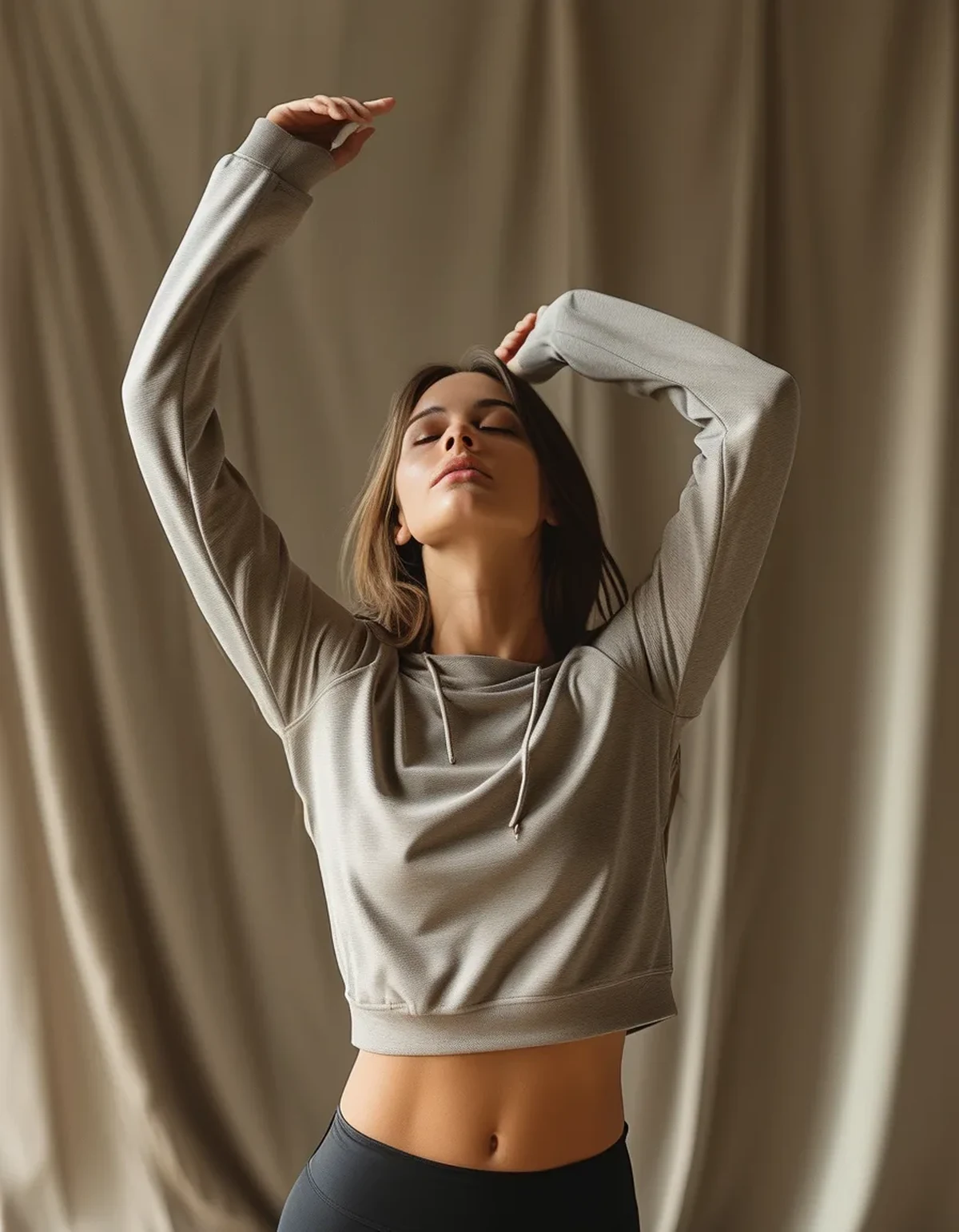
When you raise your arms, the shoulder and chest fabric lifts. A garment resolves that by pulling the nearest available slack upward - which is the hem. On a hip-length top that means an inch or two of travel. On a mid-thigh tunic that means the whole hem sweeps up, because there is far more fabric to gather.
The deciding factor is whether the hem is anchored by friction. Against a slick, shiny legging surface, the hem slides freely and stays wherever the movement left it. Against a matte or brushed surface, it grips and returns.
This is why a tunic that stays put over cotton leggings climbs relentlessly over a glossy compression pair. Same top, different friction, different behavior.
So the useful question is not how long is it, but what is it sitting against and can the hem move sideways instead of upward.
What construction features actually hold a top down?
In rough order of effectiveness:
1. A curved hem with a longer back. A back hem 2-4 inches longer than the front covers through a hinge or a forward fold, which is when coverage is most likely to fail. Look for high-low or scooped hems, not straight ones.
2. Side slits or vents. A slit lets the hem widen and move laterally when you bend, instead of the fabric having only one direction to go. This is the detail that most reliably separates tops that work from tops that do not.
3. A slightly weighted or banded hem. A rolled hem, a wider hem allowance, or a fabric with a bit of drape resists climbing. Very light, floaty fabric is the worst offender even at generous lengths.
4. A relaxed-not-oversized cut. Oversized creates more slack to gather. Skimming the body with 2-3 inches of ease moves less.
5. Set-in rather than dropped shoulder seams. A dropped shoulder pulls the entire body of the garment upward when you raise your arms - which is exactly the mechanism you are trying to avoid.
Does the bottom layer really matter that much?
More than the top does, in a lot of cases.
Surface finish is the variable. Shiny, coated, or high-sheen compression fabrics are engineered to be slick - great for reducing chafe, terrible for holding a hem. Brushed, matte, or lightly textured surfaces provide friction and keep the top where you put it.
A high, wide waistband helps twice over. It gives the hem a broader surface to sit against, and it stops the leggings themselves from shifting - a legging waistband that rolls takes the top with it.
A fitted base layer under a loose top is the reliable trick. A close-fitting tank tucked into the waistband gives the outer layer something to grip, and it means brief exposure during a movement does not actually expose anything. This is the most effective single change most people can make, and it costs one thin tank.
Watch the total layer count in warm weather - and August is exactly the wrong month to add layers casually. A fitted tank plus a technical top beats a tank plus a cotton tee plus a tunic, both for heat and for movement.
5 mistakes that make riding up worse
1. Sizing up for coverage. More fabric means more slack to gather, and the extra length arrives with extra volume. Size for fit and choose length deliberately instead of using size as a length proxy.
2. Cotton or cotton-blend outer layers. Cotton absorbs moisture, gets heavier, clings unpredictably, and holds a shape once bunched. A technical knit with a small percentage of elastane recovers from being pushed up; cotton stays where you left it.
3. Tucking a loose top into the waistband. It seems logical and it creates a bulky ridge that then works its way out mid-set, usually all at once. Tuck a fitted base layer instead and let the outer layer hang.
4. Ignoring the sleeve. A tight sleeve or cuff transmits every arm movement into the body of the garment. A slightly relaxed sleeve reduces how much the hem gets pulled.
5. Testing the fit standing still. Do the movements in the fitting room - arms overhead, a forward fold, a squat. Thirty seconds of testing prevents a season of adjusting.
What works for specific activities?
Different movements fail in different ways.
Yoga and pilates: inversions and forward folds are the hard cases. A fitted base layer is close to mandatory - no loose top survives a downward dog. Look for tops with a genuinely fitted torso and volume only through the sleeve.
Running: repetitive arm swing means gradual climbing over distance. Side slits plus a matte legging surface handle this best. Length past mid-hip adds drag more than coverage.
Strength training: overhead pressing is the failure point. A one-piece long-sleeve base layer with a relaxed second layer works better than any single garment.
Cycling and spin: the forward-leaning position means the back hem does the work. A pronounced high-low hem is the priority here over anything else.
Swimming: entirely different requirements - look for purpose-built swim fabric with an attached or integrated bottom rather than adapting land activewear, which becomes heavy and transparent when wet.
FAQ: Modest Activewear Fit Questions, Answered
Is there a fabric that never rides up?
No single fabric, but matte-faced leggings plus a technical top with side slits gets close. Friction and vents beat length every time.
Should I look for tops with an inner grip band?
Some brands add a silicone strip inside the hem. It works, but it can feel restrictive and it wears out with washing. A fitted base layer achieves the same thing more comfortably.
How do I layer for fall without adding bulk?
Swap the cotton mid-layer for a thin technical long sleeve as the base, keep the loose top as the outer, and add warmth at the extremities. The layer count stays the same and the warmth goes up - which is the transition most people need over the next couple of months.
TL;DR:
- Riding up is a friction and slack problem, not a length problem - longer tops travel further.
- Look for: longer back hem, side slits, weighted hem, relaxed-not-oversized cut, set-in shoulders.
- Matte leggings grip; shiny compression fabric lets everything slide.
- A fitted base layer tucked into the waistband is the single highest-return fix.
- Test with arms overhead and a forward fold before buying, not standing still.
The class where you stop adjusting is the one where you finally notice how the workout felt. Two construction details and one thin tank usually get you there.
See It in Motion
Seen here: High Waist Yoga Leggings with Inner Pocket — shop it on bubblelime.com
Keep Reading
This article is for general informational and styling purposes only. Fit, sizing, and product availability may vary.