How to Wear Modest Activewear in Summer Heat Without Overheating
Quick Answer: The key to modest activewear in heat is moisture-wicking, breathable synthetic fabric (not heavier natural fibers) combined with looser, non-clinging cuts that allow airflow — full coverage doesn’t have to mean full heat retention if fabric weight and weave are chosen correctly.
Full-coverage activewear in 90-degree heat sounds like a recipe for misery, and with the wrong fabric, it can be. But the coverage itself isn’t actually the main heat problem — fabric choice is.
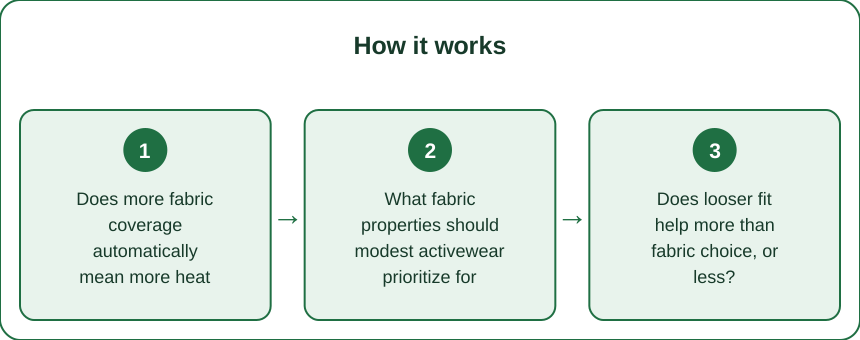
Does more fabric coverage automatically mean more heat retention?
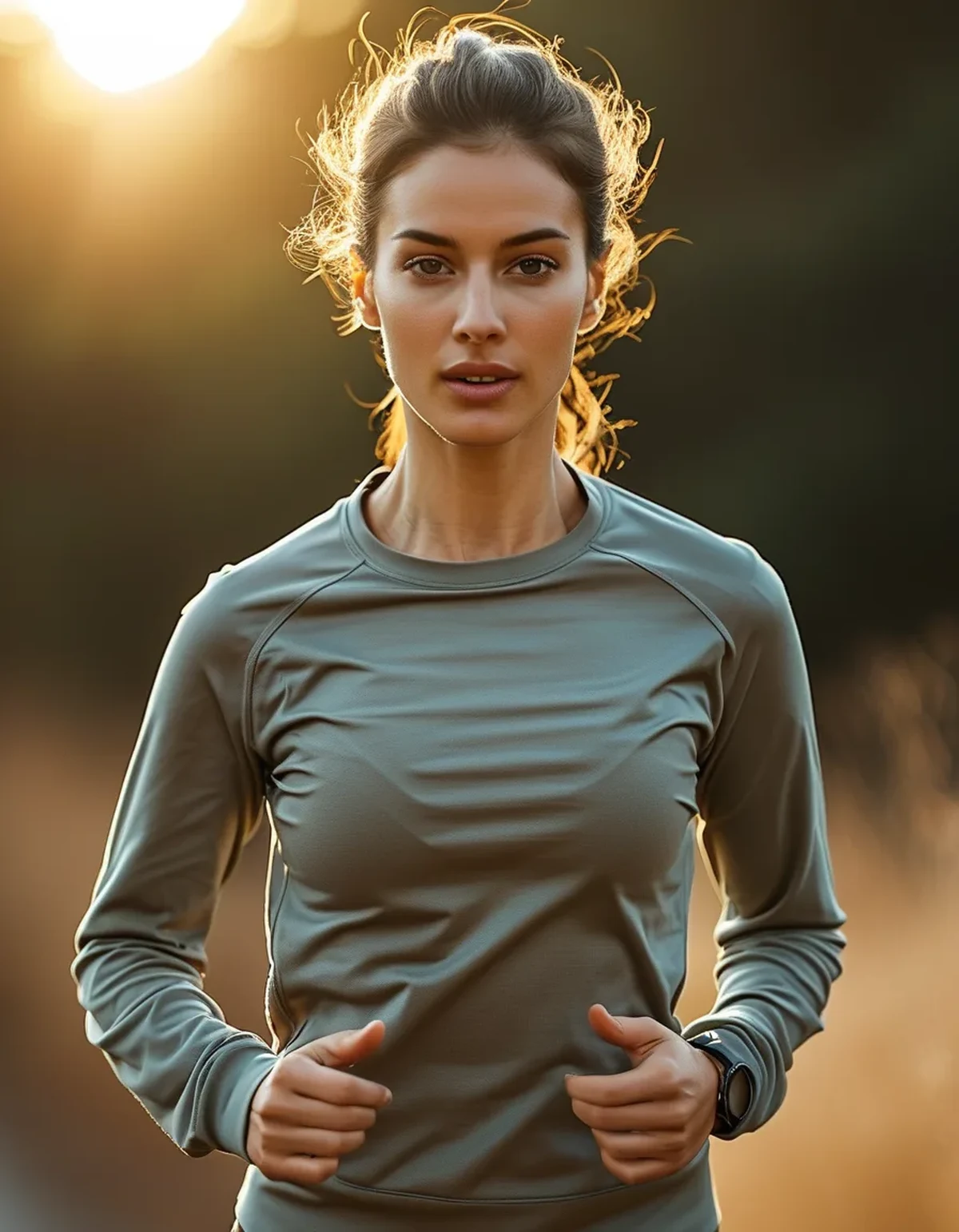
Not as directly as it seems. Fabric weight and weave affect heat retention far more than total coverage area — a lightweight, breathable long-sleeve technical fabric can trap less heat than a heavier short-sleeve cotton piece, because moisture-wicking synthetics move sweat away from skin efficiently, while cotton absorbs and holds it, creating a clammy heat-trapping layer regardless of how much skin is covered.
What fabric properties should modest activewear prioritize for heat?
Lightweight, moisture-wicking synthetic blends (polyester or nylon with spandex) in an open or mesh-panel weave perform best in heat — look specifically for UPF-rated ‘sun protective’ athletic fabrics, which are often engineered specifically for the coverage-plus-heat-management combination, since sun-protective activewear faces the identical design challenge as modest activewear.
Does looser fit help more than fabric choice, or less?
About equally important, and they compound. A looser, non-clinging cut allows air to circulate between fabric and skin, creating an evaporative cooling effect that a tight, second-skin fit prevents regardless of fabric quality. For modest activewear specifically, a slightly relaxed fit through the body with fitted cuffs (to prevent flapping) tends to balance coverage, modesty, and airflow best.
Layering Without Overheating: Does It Actually Work in Summer?
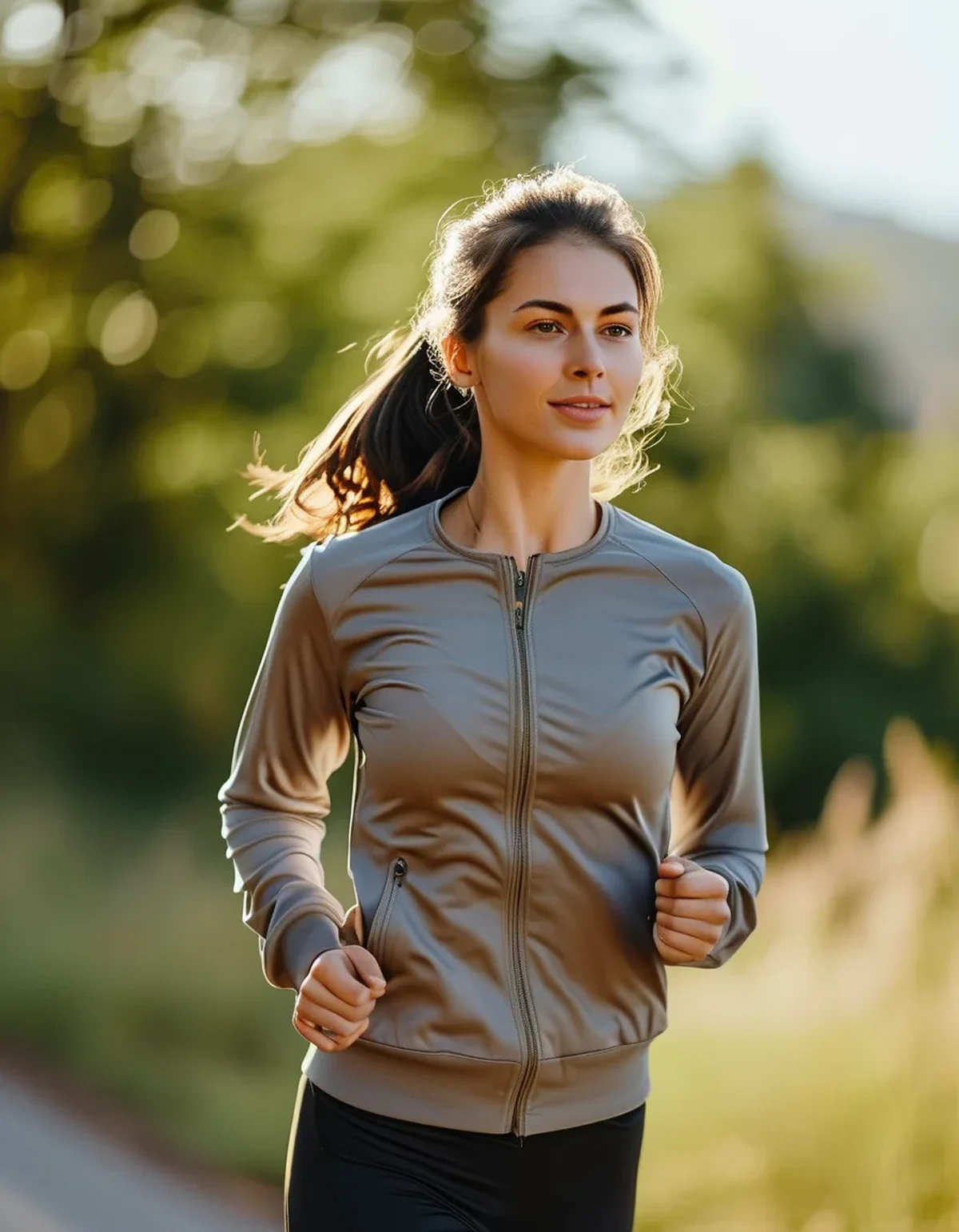
Yes, if the layers are chosen deliberately. A lightweight, breathable base layer under a slightly looser, vented outer layer — rather than two similarly heavy pieces — allows the base layer to wick moisture while the outer layer’s looser fit and any vent panels let heat escape. This differs from cold-weather layering logic, where trapping warmth is the goal; summer modest layering is about directing airflow and moisture, not insulating.
What role does color play in modest activewear heat management?
A meaningful one, often overlooked. Lighter colors reflect more solar radiation than dark colors, which absorb heat — this effect is well-documented and applies to any fabric, but matters more for modest activewear specifically since more surface area is exposed to direct sun in typical outdoor wear. Choosing lighter shades for outdoor summer sessions is a simple, free heat-management lever.
FAQ: Modest Activewear in Heat, Answered
Is compression fabric worse for heat than regular activewear fabric?
Generally yes if very tight, since it reduces the air layer between skin and fabric that supports evaporative cooling — a moderate rather than maximum compression level tends to balance support and heat better.
Does UPF-rated fabric actually run cooler, or just block sun?
Many UPF fabrics are specifically engineered with moisture-wicking and breathability in mind alongside sun protection, so a quality UPF piece often performs better in heat than a similar-weight non-UPF fabric, not worse.
Should modest activewear for summer prioritize looser fit over technical fabric, or vice versa?
Both matter enough that neither should be skipped — a technical fabric in a too-tight cut, or a great loose cut in heavy cotton, both underperform compared to getting both factors right together.
TL;DR:
- Fabric weight and weave affect heat more than total coverage area
- Lightweight, moisture-wicking synthetics with mesh panels perform best
- Looser, non-clinging cuts allow evaporative cooling that tight fits prevent
- Lighter colors reflect more heat than dark ones — a simple, free adjustment
Full coverage and heat management aren’t actually in conflict — they just require choosing fabric and fit deliberately instead of assuming more coverage always means more heat.
See It in Motion
Seen here: UPF 50+ Short Sleeve Rashguard Swim Shirt — shop it on bubblelime.com
Keep Reading
This article is for general informational and styling purposes only. Fit, sizing, and product availability may vary.