Staying Covered Without Overheating (Fabric Does the Work)
Covered training clothing and hot conditions appear to be in direct conflict, and they are — until you realise that coverage and heat retention are separate properties, and that the right fabric decouples them almost entirely. Here is why they conflict, what solves it, and how to layer.
Why Coverage and Heat Conflict
More fabric, more insulation — usually: the the-more-fabric-usually-means-more-heat (the additional coverage typically adding insulation from the summer-guide logic — the more-fabric-more-heat), the the-sweat-cannot-evaporate-through-the-wrong-fabric (the evaporation being blocked by unsuitable material from the layering-without-overheating logic — the blocked-evaporation), the the-evaporation-is-how-you-cool (the cooling depending on sweat evaporating from the layering-without-overheating logic — the evaporation-cools-you), the the-layering-compounds-it (the multiple layers multiplying the problem from the layering-without-overheating logic — the layering-compounds), the the-so-people-assume-they-must-choose (the the apparent forced choice between coverage and comfort from the summer-guide logic — the assumed-tradeoff), and the reframe (the coverage-versus-heat conflict as a fabric problem rather than a coverage one — because cooling depends on evaporation, which the right material permits).

What Fabrics Solve It
Decoupling coverage from heat: the the-lightweight-technical-knits (the thin performance fabrics covering without insulating from the summer-guide logic — the lightweight-technical), the the-genuinely-moisture-wicking-fabric (the wicking moving sweat to where it can evaporate from the layering-without-overheating logic — the wicking-fabric), the the-mesh-and-perforated-panels (the ventilation panels placed where heat builds from the summer-guide logic — the ventilation-panels), the the-loose-cut-over-tight (the airflow between fabric and skin from the summer-guide logic — the loose-allows-airflow), the the-light-colours-in-sun (the pale colours reflecting rather than absorbing from the summer-guide logic — the light-colours), the the-avoid-heavy-cotton (the cotton holding sweat and staying wet from the layering-without-overheating logic — the avoid-cotton), the the-upf-fabric-for-outdoor-training (the sun-protective fabric for outdoor sessions from the summer-guide logic — the upf-outdoors), and the the-one-good-layer-beats-two-cheap-ones (the a single well-chosen layer outperforming doubling up from the layering-without-overheating logic — the one-good-layer).
The Layering Notes
Building the outfit: the the-the-base-layer-does-the-work (the layer against the skin determining comfort from the layering-without-overheating logic — the base-layer-decides), the the-minimise-the-number-of-layers (the fewer layers being cooler at equal coverage from the layering-without-overheating logic — the fewer-layers), the the-choose-longer-cuts-over-extra-layers (the long single garments beating stacked short ones from the wardrobe-guide logic — the longer-not-more), the the-ventilation-where-heat-builds (the placing openings at the back and underarm from the summer-guide logic — the ventilate-hot-spots), the the-a-breathable-head-covering (the head coverings in breathable fabric from the summer-guide logic — the breathable-head-covering), the the-train-in-cooler-parts-of-the-day (the timing sessions to avoid peak heat from the summer-guide logic — the cooler-hours), the the-hydrate-more-when-more-covered (the higher fluid needs with greater coverage from the summer-guide logic — the hydrate-more), and the frame (the modest training in heat as a fabric problem — lightweight wicking technical fabric, loose cuts, ventilation panels and fewer layers rather than more. Choose lightweight wicking technical fabric in a loose cut with ventilation panels, minimise the number of layers, and train in cooler hours).
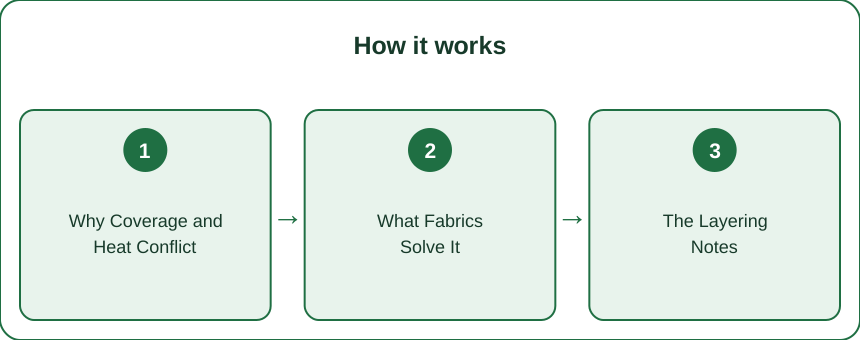
Covered training clothing and hot conditions appear to be in direct conflict — until you realise that coverage and heat retention are separate properties, and the right fabric decouples them. They conflict because more fabric usually means more heat, sweat cannot evaporate through the wrong fabric, evaporation is how you cool, layering compounds it, and people assume they must choose. Fabrics that solve it: lightweight technical knits, genuinely moisture-wicking fabric, mesh and perforated panels, a loose cut over tight, light colours in sun, avoiding heavy cotton, UPF fabric outdoors, and one good layer beating two cheap ones. Layer by letting the base layer do the work, minimising the number of layers, choosing longer cuts over extra layers, ventilating where heat builds, using a breathable head covering, and hydrating more.
See It in Motion
Seen here: UPF 50+ Short Sleeve Rashguard Swim Shirt — shop it on bubblelime.com
Keep Reading
This article is for general informational and styling purposes only. Fit, sizing, and product availability may vary.