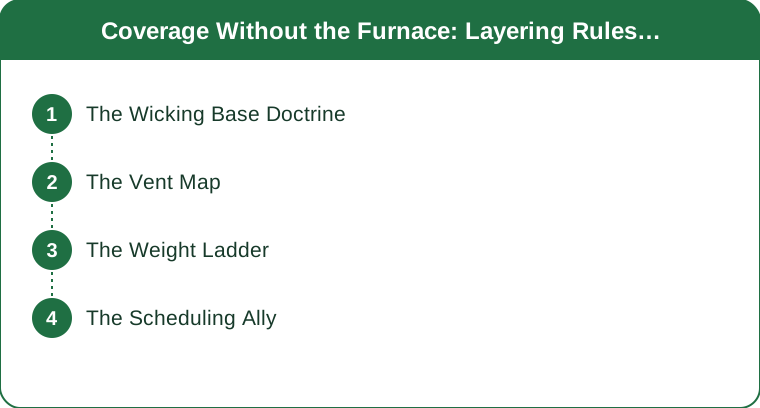
Coverage Without the Furnace: Layering Rules for Hot-Weather Modest Training
Summer asks modest athletes an engineering question: full coverage AND thermal regulation? The answer is layering science — wicking bases, deliberate vents, fabric weights chosen like equipment. Heat-smart coverage exists; it just requires shopping like an engineer.

The Wicking Base Doctrine
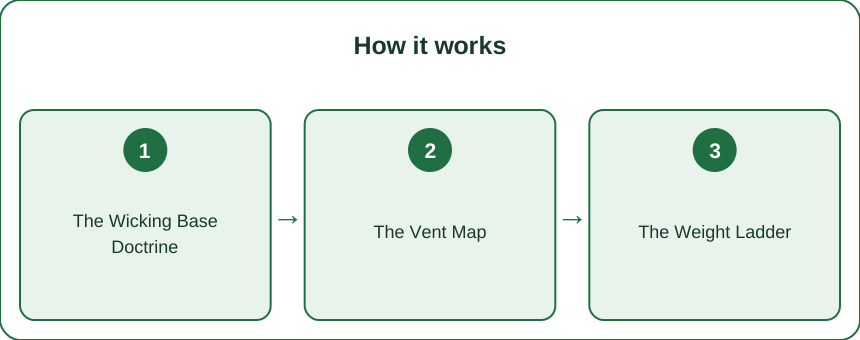
The layer touching skin decides everything: a lightweight wicking base moves sweat out to evaporate, keeping the system dry (cotton bases soak and cling — the furnace effect is almost always a wet-cotton effect). Base right, and the outer layer floats instead of sticks.
The Vent Map
Heat exits at known ports: underarms (mesh panels or vented seams), the back (vent pleats), wrists and ankles (looser cuffs breathe). Modest lines engineered for summer place vents exactly there — the coverage stays; the convection starts.
The Weight Ladder
Summer fabric weights matter more than layer counts: two featherweight technical layers out-breathe one heavy one. Look for ‘lightweight’ in the technical sense — the hold-to-light test works here too (airflow needs pathways, not necessarily transparency).
The Scheduling Ally
Engineering plus scheduling wins July: dawn and dusk sessions, shade-mapped routes, and the water-doubled hydration math (coverage plus heat raises the sweat bill invisibly). The full-coverage athlete in a heatwave is running an extra system — fund it with fluids and timing.
Wicking base first, vents at the ports, featherweights doubled, dawn sessions scheduled. Coverage was never the heat problem — cotton and noon were. Engineer both away and July trains fine.
See It in Motion
Seen here: UPF 50+ Racerback Yoga Tank Top — shop it on bubblelime.com
Keep Reading
This article is for general informational and styling purposes only. Fit, sizing, and product availability may vary.