How to Layer Modest Activewear Without Overheating
Quick Answer: Overheating in modest activewear comes from layer count and fabric choice, not from coverage itself. The fix is one technical base layer that covers fully, plus one loose outer layer - never two fitted layers stacked. Choose lightweight moisture-wicking synthetics or merino next to skin and a loose, woven or open-knit outer, so air can move between them. Cotton anywhere in the stack is what turns coverage into overheating.
The principle is that the air gap between layers does the cooling, and stacking fitted layers eliminates it.
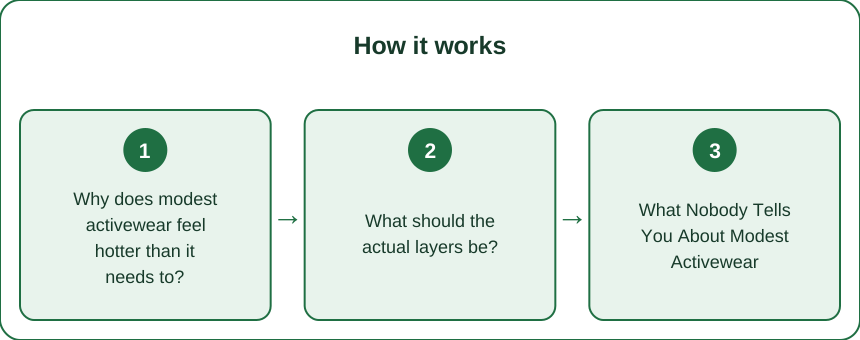
Why does modest activewear feel hotter than it needs to?
Three specific reasons, all fixable without reducing coverage.
Two fitted layers eliminate the air gap. A fitted long-sleeve under a fitted top presses fabric against fabric against skin. Cooling depends on air movement and evaporation, and there is nowhere for either to happen.
Cotton is the most common single mistake. It absorbs sweat and holds it - up to a large multiple of its own weight - and stays wet. Wet cotton against skin under a second layer is the least comfortable combination available, and it never dries mid-session.
Coverage concentrates heat in specific places - forearms, neck, and head. These are high heat-loss areas and covering them all removes a disproportionate share of your cooling capacity, which is worth designing around rather than ignoring.
And it is not actually the coverage itself. Desert clothing has been full-coverage for millennia. Loose, light, breathable fabric with coverage is cooler than tight synthetic with less coverage, because it shades the skin while allowing airflow.
Which means the design principle is: cover fully, but keep it loose and technical. That combination is more comfortable than the compromise most people settle for.
What should the actual layers be?
Two layers, chosen deliberately.
Base layer: fitted, technical, full coverage. A lightweight long-sleeve in polyester, nylon, or merino wool - merino is genuinely excellent here because it regulates temperature and resists odour. Look for fabric under about 150 GSM for warm conditions.
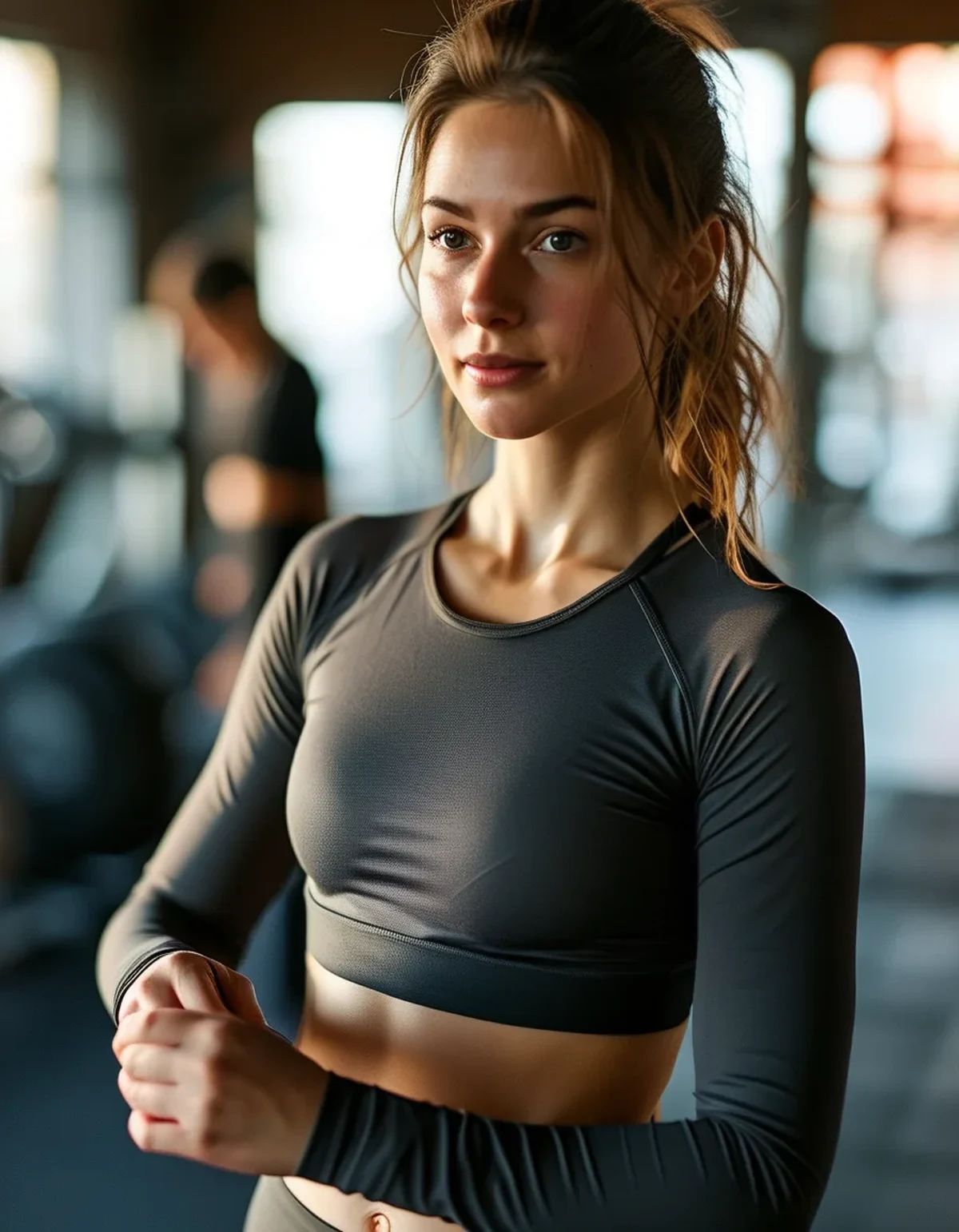
Outer layer: loose. A relaxed-fit tee, a tunic, or an open-knit top. The looseness is the functional element, not the modesty element - it creates the air channel where evaporation happens.
Bottom half: full-length leggings in a technical fabric, ideally with a mesh or lighter panel behind the knee. A loose culotte or wide-leg over leggings works if the outer layer is genuinely light and woven.
Sport hijab specifics matter. A dedicated sports hijab in a lightweight wicking fabric with a fitted under-cap is meaningfully cooler than a wrapped everyday scarf, and it does not need constant adjusting. The head is a significant heat-loss site, so this is the highest-value single upgrade for many people.
What to avoid: any cotton, any second fitted layer, and heavy jersey. A cotton undershirt beneath technical activewear cancels the technical fabric entirely - a common and invisible mistake.
Colour matters outdoors. Lighter colours reflect more radiant heat, which is a real effect in direct sun and irrelevant indoors.
What Nobody Tells You About Modest Activewear
Merino works in heat, not just cold. The wool association with winter is misleading - fine merino regulates temperature in both directions and resists odour better than any synthetic, which matters more when you are wearing more fabric.
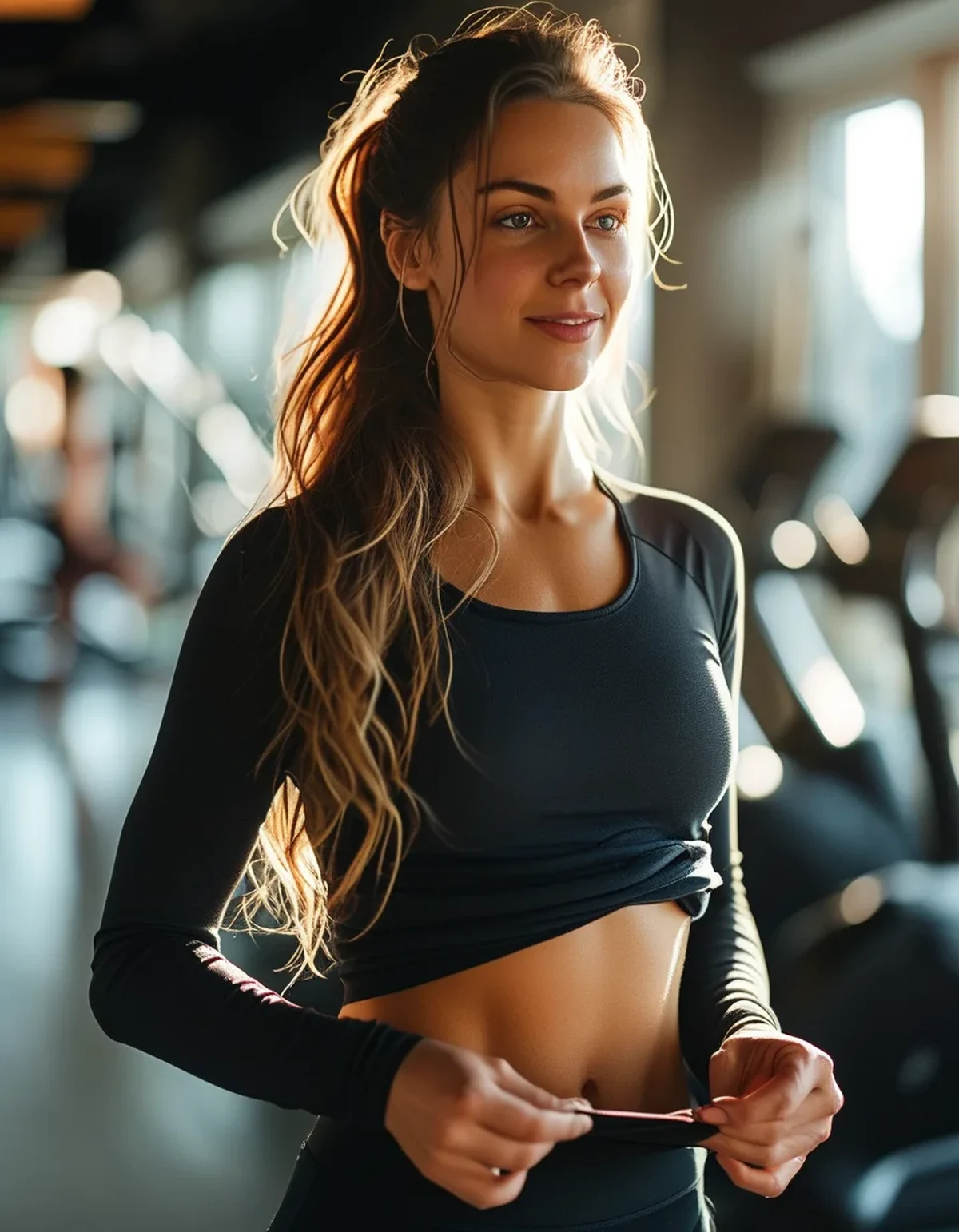
Seam placement decides whether long sleeves chafe. Underarm and inner-arm seams rub during repetitive movement. Flatlock seams, or raglan sleeves with no shoulder seam, prevent it - and this is invisible on a product page unless you look for it.
Coverage garments need washing more often, not less. More fabric means more sweat absorbed. Wash after every session, skip fabric softener (it coats fibres and traps odour permanently), and hang dry.
Hydration needs go up. More coverage means somewhat reduced evaporative cooling, which means more sweat produced for the same cooling effect. Drink more than you would in less clothing, particularly in warm conditions.
The autumn transition is the easiest part of the year. As temperatures drop, full coverage stops being a heat problem and becomes an advantage - the layering that felt like a compromise in August is simply appropriate in October. It is a good moment to invest in a proper merino base layer, which will serve through winter.
And the genuinely underrated point: swimwear and modest activewear have converged. Technical full-coverage swim fabrics are now widely available in athletic cuts, and chlorine-resistant polyester blends hold up considerably better than the nylon-elastane blends that used to be the only option.
This is general information, not medical advice.
FAQ: Modest Activewear Questions, Answered
Can full coverage activewear actually be cool?
Yes - loose, light, technical fabric with coverage is cooler than tight synthetic with less coverage, because it shades the skin while permitting airflow. Desert clothing has worked this way for a very long time.
What fabric should the base layer be?
Lightweight polyester, nylon, or fine merino wool, ideally under about 150 GSM for warm conditions. Merino has the advantage of regulating temperature in both directions and resisting odour.
Why does my modest activewear smell after one wear?
Usually synthetic fabric trapping bacteria, made worse by fabric softener coating the fibres. Wash after every session without softener, hang dry, and consider merino for the base layer.
How do I stop long sleeves from chafing?
Look for flatlock seams or raglan sleeves with no shoulder seam. Underarm and inner-arm seam placement is the usual culprit and it is worth checking before buying.
Is a sports hijab really different from a regular scarf?
Substantially. Lightweight wicking fabric with a fitted under-cap stays in place without adjustment and is noticeably cooler, since the head is a significant heat-loss site.
What should I wear as the weather cools?
The same two-layer structure with a slightly heavier merino base. Autumn is when full coverage stops being a heat-management problem and becomes an advantage.
TL;DR:
- Overheating comes from layer count and fabric, not coverage - one technical base plus one loose outer, never two fitted layers.
- No cotton anywhere in the stack; a cotton undershirt cancels the technical fabric above it.
- Merino works in heat too and resists odour, which matters more when you are wearing more fabric.
- A proper sports hijab with a fitted under-cap is the highest-value single upgrade, since the head is a major heat-loss site.
- Check for flatlock or raglan seams to prevent long-sleeve chafing, and drink more than you would in less clothing.
The underlying idea is simple: it is the air gap between layers that cools you. Keep the gap, keep the coverage, and the trade-off you were told to accept mostly disappears.
See It in Motion
Seen here: Super High Waist Embossed Yoga Leggings with Inner Pocket — shop it on bubblelime.com
Keep Reading
This article is for general informational and styling purposes only. Fit, sizing, and product availability may vary.