Layering Modest Activewear for Fall Without Adding Bulk
Quick Answer: Bulk in modest layering comes from stacking similar-weight fabrics rather than from the number of layers. Use one thin technical base, one insulating mid-layer that ends at a different length than the base, and one wind layer. Different hem lengths and one fitted layer against the skin do more to prevent bulk than reducing the number of pieces.
Summer modest dressing is a coverage problem. Fall modest dressing is a volume problem.
The good news is that the volume comes from a few specific choices, and every one of them is fixable.
Why does fall layering add so much bulk?
Three specific causes, and none of them is the layer count.
Stacking similar weights. Two mid-weight cotton layers create far more volume than a thin technical base plus a mid-weight layer, even though the count is the same. Fabric weight compounds; layer count alone does not.
Matching hem lengths. When your base, mid, and outer layer all end at the same point around the hip, the eye sees one thick horizontal edge and the fabric physically bunches at that line.
Loose against loose. A relaxed base under a relaxed mid-layer means neither is controlled, and the inner layer bunches inside the outer one every time you move. This is where most of the visible bulk actually comes from.
Cotton is the usual culprit. It holds moisture, gets heavier as you warm up, and clings unpredictably. A cotton base layer under anything is the most common single mistake in cool-weather modest dressing.
And bulk is not just aesthetic — it restricts overhead reach and hip range, which changes how you actually move in a workout.
What are the three layers that actually work?
One of each type, with clear roles.
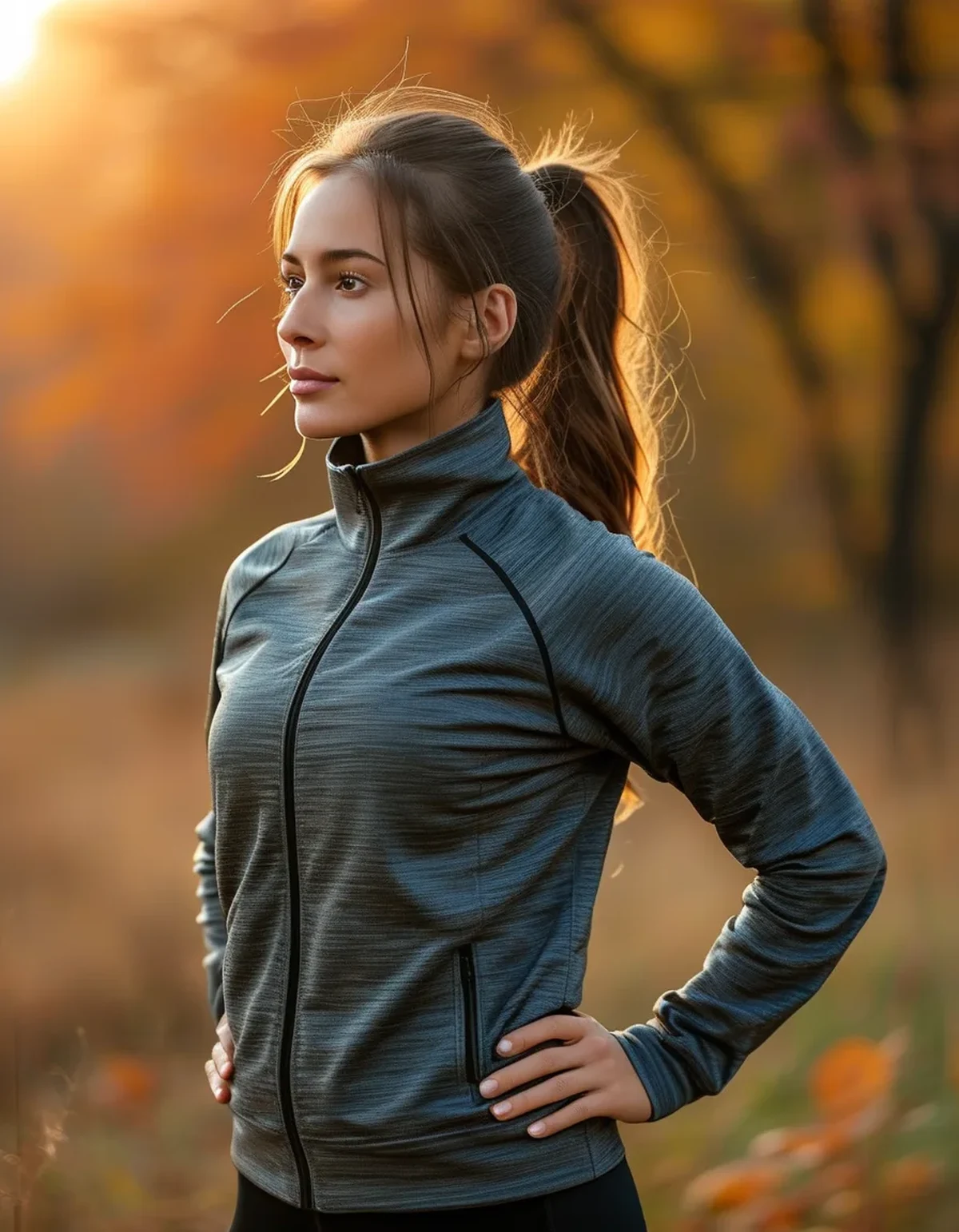
Layer 1 — thin, fitted, technical. A long-sleeve base in a light synthetic or merino, close to the body, full arm and torso coverage. Fitted is not the same as tight; it means it does not have excess fabric to bunch. This layer’s entire job is moisture management, and cotton fails at it.
Layer 2 — insulating, looser, different length. A relaxed tunic, longline top, or half-zip that ends noticeably above or below the base layer’s hem. Different lengths create a deliberate stepped line rather than a single thick edge.
Layer 3 — wind and light rain only. A thin shell, ideally longer than both. This layer does not need insulation; it needs to stop moving air, which is what actually makes cool mornings feel cold.
Skirts or wide trousers over leggings follow the same principle: the under layer fitted, the over layer with movement, and the two ending at clearly different points.
And keep one layer removable without disturbing the others. The mid-layer should come off without pulling the base up or requiring you to remove a head covering — a half-zip or an open front handles this best.
What Nobody Tells You About Sleeves and Cuffs in Cold Weather
The cuffs are where cool-weather modest layering usually goes wrong.
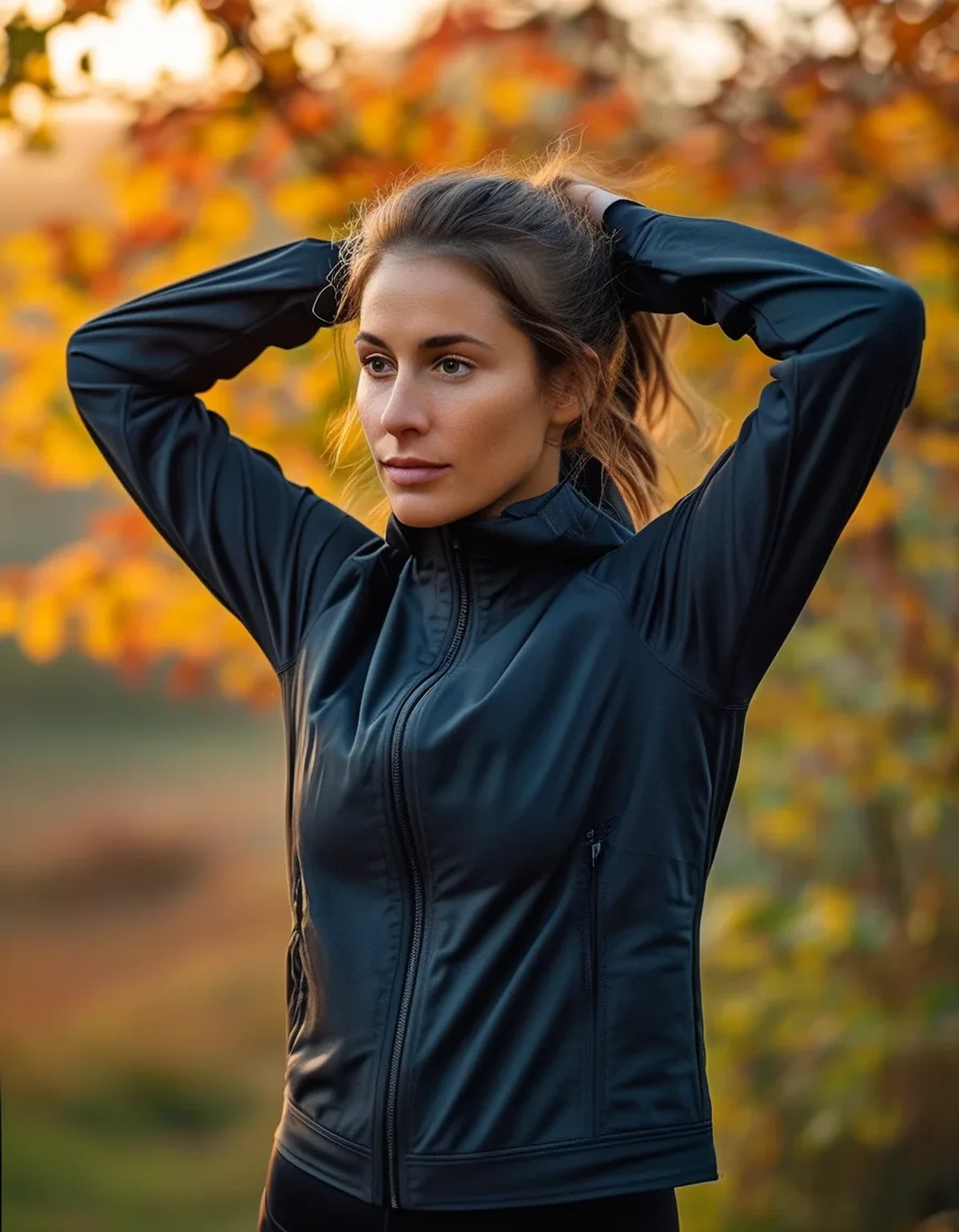
Sleeves ride up when you layer. Every layer added means one more sleeve that can shift, and by the third set of arm raises the base layer is at your elbow. Thumbholes on the base layer solve this completely and cost nothing.
Cuff bulk restricts wrist movement more than people expect. Three sleeve cuffs stacked at the wrist creates a genuine range restriction. Stagger the cuff lengths — base at the hand, mid at the wrist, outer slightly short — so no two ends sit in the same place.
Cold hands make everything else feel colder. The body prioritizes core temperature by restricting blood flow to the extremities, so cold hands often mean your torso is under-insulated, not that you need gloves. If your hands are cold in October, add a torso layer before you add gloves.
Wide sleeves and wind do not mix. A loose sleeve acts as a channel that pulls cold air up the arm. A cuffed or gathered outer sleeve makes a larger difference to comfort than another layer would.
And check your reach before you leave. Raise both arms fully overhead. If any layer pulls the one under it out of position, the stack will not survive a workout — which is the test almost nobody runs at home and everyone discovers outside.
How do you keep coverage secure while moving?
Five practical details.
Longer base layers, tucked. A base that reaches mid-thigh and tucks into leggings does not ride up, which is the most common coverage failure during floor work and overhead movement.
High-rise bottoms, always. The waistband should sit above the navel so that bending forward does not create a gap between layers.
Choose the mid-layer for weight, not just coverage. A very light tunic will lift with movement or wind; slightly heavier fabric hangs and stays put. This is one of the few cases where a bit more weight solves a problem rather than causing one.
Sport-specific head coverings for cool weather — a lightweight sport hijab under a headband or a beanie holds position far better than either alone, and the beanie handles the heat loss that becomes real once mornings drop below 50°F.
Test everything on a walk before you test it in a workout. Twenty minutes outside reveals the wind entry points and the layer that shifts, without committing you to an hour of adjusting.
Transition-season note: the hardest weeks are exactly now, late summer into early fall, when a 55°F morning becomes a 75°F afternoon. Building the stack so the mid-layer removes cleanly matters more in September and October than in December, when you simply keep everything on.
FAQ: Modest Fall Layering Questions, Answered
What fabric should the base layer be?
Merino wool or a light synthetic. Merino handles odor better and stays comfortable across a wider temperature range; synthetics dry faster and cost less. Both beat cotton decisively, because cotton holds sweat against the skin and gets colder as you cool down — which is precisely the failure mode on an autumn morning.
How do I stop layers from clinging in dry fall air?
Static increases as humidity drops, which is why this problem arrives with the season rather than with the clothes. A wool dryer ball, skipping the dryer for synthetics, and a light leave-in conditioner spray on the inside of the outer layer all reduce it. A slightly heavier outer layer also clings less than a very light one.
Can I wear the same modest activewear indoors and outdoors?
The base and mid-layers, yes. What changes is the outer layer, which is the piece doing the wind work — indoors it is unnecessary and it makes you overheat within minutes. Building the stack so the outer shell removes and packs small is what lets one set of clothes cover both.
TL;DR:
- Bulk comes from stacking similar-weight fabrics and matching hem lengths, not from layer count.
- Thin fitted technical base, looser mid-layer at a different length, thin wind shell.
- Stagger cuff lengths and use thumbholes so sleeves stop riding up.
- Cold hands usually mean the torso needs another layer, not that you need gloves. Swap the cotton base for a thin technical one first. It is the single change that removes the most bulk while adding the most warmth, and it costs less than a new outer layer.
See It in Motion
Seen here: High Waist Yoga Leggings with Side Pockets — shop it on bubblelime.com
Keep Reading
This article is for general informational and styling purposes only. Fit, sizing, and product availability may vary.