How to Find Modest Swimwear That Stays Put in Actual Water
Quick Answer: Modest swimwear stays put in water when four construction features line up: genuine swim fabric (nylon or polyester with 15 to 20 percent spandex — never cotton blends), a fitted base layer under any loose overlayer, secured hems and cuffs with elastic or thumb loops, and weighted or snap-down tunic designs that resist floating up. The failure modes — riding, ballooning, cling, and drag — are all solved at the product-design level, which means reading the details before buying matters more than sizing tricks after.
The hardest test of any garment is being loose, wet, and in motion at the same time. Regular modest activewear only has to survive gravity; modest swimwear has to survive buoyancy, which pushes fabric up exactly where you want it down. The brands that understand this build differently — and the details that matter are visible in the product description if you know what to look for.

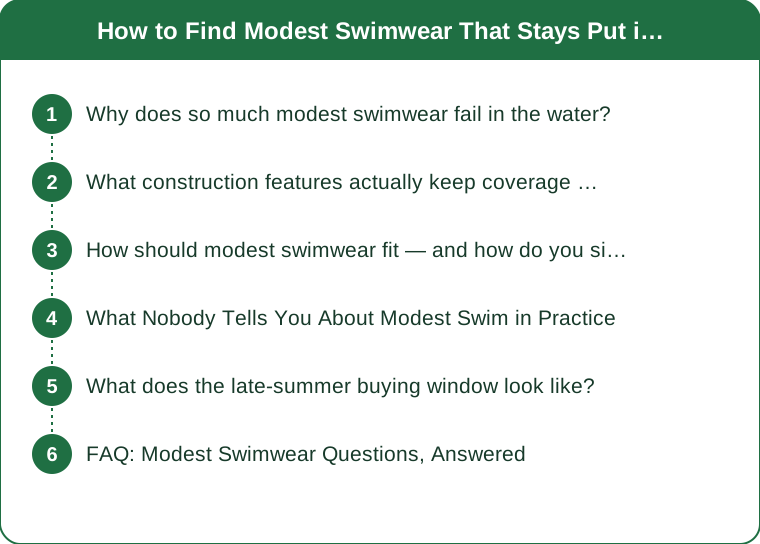
Why does so much modest swimwear fail in the water?
Because it is designed on land, for standing, photographed dry.
Buoyancy is the core problem. Loose fabric traps air and floats — a tunic that drapes beautifully on the pool deck becomes a jellyfish bell the moment you wade past your waist, rising to the surface while you keep going down. Every unsecured hem is an air pocket waiting to inflate.
Wet cling is the second. Thin loose fabric without a fitted layer beneath it clings to whatever it touches when soaked, tracing exactly what it was hired to skim over. Coverage that becomes contour has failed its one job — and this is the specific failure of cotton and rayon blends, which also absorb multiples of their weight in water and dry slowly enough to chill you.
Drag is the third, and it compounds with the first two. Excess soaked fabric adds real resistance; swimming laps in a billowing overlayer is training with a parachute, which is why actual swim-designed modest lines cut closer than their landwear equivalents and put the looseness only where it does not catch water.
The pattern across all three: the qualities that make modest clothing work on land — flow, drape, generous cut — are the exact qualities water weaponizes. Good modest swimwear is not modest clothing in swim fabric. It is swimwear re-engineered for coverage, and the difference shows up in every seam.
What construction features actually keep coverage in place?
Seven details separate functional from decorative. Check the product page for each.
Fitted base, modest over. The reliable architecture is a two-part system: a fitted swim legging and fitted top as the base, with the looser coverage layer — tunic, skirt, dress — built or worn over it. The base handles cling and exposure; the overlayer handles silhouette. One-piece loose designs without a fitted base are the category’s biggest disappointments.
Elastic or banded hems on the overlayer. A tunic with a gently elasticized hem, side snaps, or an internal drawstring resists ballooning. Some designs weight the hem with a wider banded seam — subtle and effective.
Attached shorts or leggings under skirts. A swim skirt without a built-in legging is a deck garment.
Thumb loops or fitted cuffs on sleeves. Long sleeves that ride to the elbow with every stroke defeat themselves; loops and snug cuffs keep them at the wrist.
High secured necklines with zip entry. A back or front zipper means the neckline can be genuinely high and snug without becoming a struggle to put on wet.
Flatlock seams, the same stitch quality as performance swim, because coverage garments have more seam-inches touching skin — more chafe opportunity per lap.
UPF rating listed, typically 50+, which full-coverage swim delivers almost for free and which quietly makes it the best sun-protection swimwear that exists.
How should modest swimwear fit — and how do you size it online?
Closer than instinct says, in the places water cares about.
The base layer should fit like performance swimwear: snug at shoulders, underbust, waistband, and cuffs, with zero excess at the ankles. Sizing up the base layer for extra modesty backfires directly — loose base fabric is what clings and shifts. Coverage comes from the design and the overlayer, never from extra inches in the base. If you wear high-waisted leggings for workouts, the swim legging should fit like your most compressive pair, not your loungewear pair.
The overlayer is where ease belongs, but bounded: enough drape to skim, hems reaching mid-thigh to knee per your standard, and secured edges as above. An overlayer sized so generously it reaches past the knee unsecured is drag and float, not extra modesty.
Online, three checks beat the size chart alone. First, look for wet photography or video — brands confident in water behavior show it, and a product page shot entirely dry and standing is telling you where the garment lives. Second, read reviews filtered for the words “rides,” “floats,” and “see-through” — the three failure words. Third, check the fabric line for the spandex percentage: 15 to 20 percent means real recovery; under 10 means the leggings will bag at the knees by the second swim.
And order two sizes the first time from a brand with easy returns. Modest swim sizing varies across brands even more than mainstream swim, and the fit test below settles it in one bathtub-adjacent session.
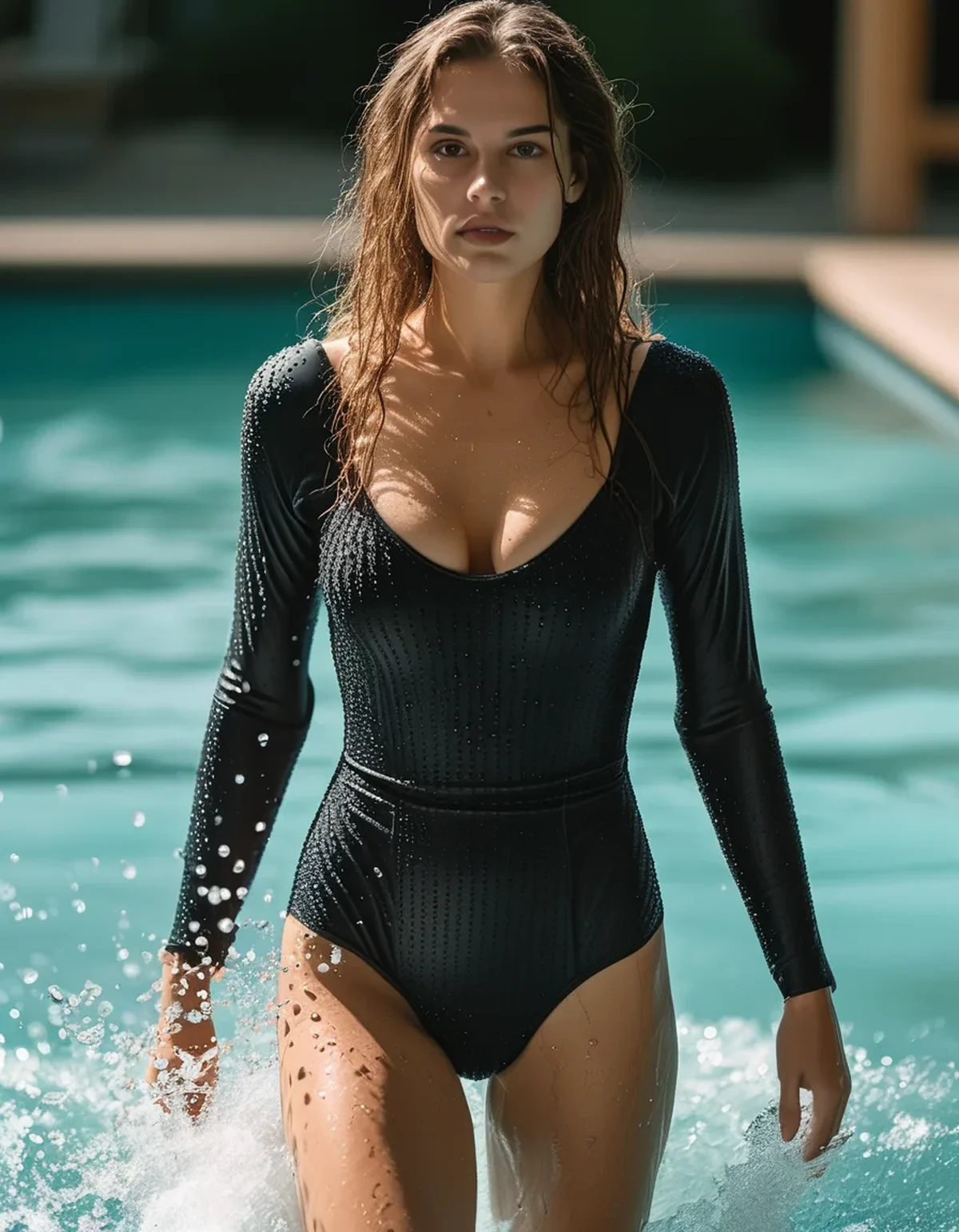
What Nobody Tells You About Modest Swim in Practice
Chlorine is harder on your swimwear than on anyone else’s, for the simple reason that you own more square inches of it. Elastane degrades with chlorine exposure, and a full-coverage suit has three times the fabric of a standard one — rinse everything in cool fresh water within minutes of leaving the pool, never wring the overlayer (roll it in a towel), and expect a weekly-swimmer’s suit to want replacement on a similar schedule to any performance swimwear, roughly a season of heavy use.
The deck-to-water transition is the moment most people actually worry about, and it has a two-part answer: dark colors and double-layer panels read opaque when wet far better than pastels — navy, black, deep plum are the safe zone, while light gray is the riskiest color in all of swimwear — and a quick full-suit soak before entering deep water pre-collapses the air pockets that would otherwise balloon on entry.
Pool rules occasionally challenge street-clothes-looking swimwear; the phrase that resolves it is “this is chlorine-rated swim fabric,” which is also the phrase to verify before buying, since some facilities genuinely do restrict cotton garments for filtration reasons. Established modest swim brands print exactly this compliance language on their pages because the conversation is common.
And the heaviness surprise: a soaked full-coverage suit climbing out of the pool weighs noticeably more than it did going in. Good swim fabric sheds most of that in the first minute; cotton-blend impostors hold it all afternoon. The ladder moment is the honest fabric test.
What does the late-summer buying window look like?
August is quietly the best and worst month to buy — best prices, thinnest stock.
Swim inventory clears now: end-of-season discounts on modest swim lines run deep, and a two-suit rotation — the practical minimum for anyone swimming weekly, since suits should dry fully between wears — costs what one suit did in May. If your current suit passed this summer’s tests, buying its twin now is the single best value move of the year.
The risk side: sizes vanish first in the middle of the range, and next spring’s restock will be full price. So audit before browsing — did this summer’s suit ride up, cling, balloon, or stay honest? Replace against the failure, not the photo: a tunic that floated wants snap-hems or a banded design next time; leggings that bagged want higher spandex; a top that rode wants thumb loops.
For indoor swimmers the season never ends, and fall is peak indoor-pool time as outdoor options close. Indoor water tends warmer and more chlorinated, which argues for the chlorine-resistant polyester end of the fabric spectrum over softer nylon — check the fiber line, since brands run both.
And if this summer proved the whole category out for you, late summer is also when to add the accessories that complete the kit at clearance prices: a swim hijab designed with a snug under-cap if you wear one, water shoes for rocky late-season lake days, and a proper swim parka or oversized towel robe — the garment that makes the walk from water to changing room the most comfortable part instead of the coldest.
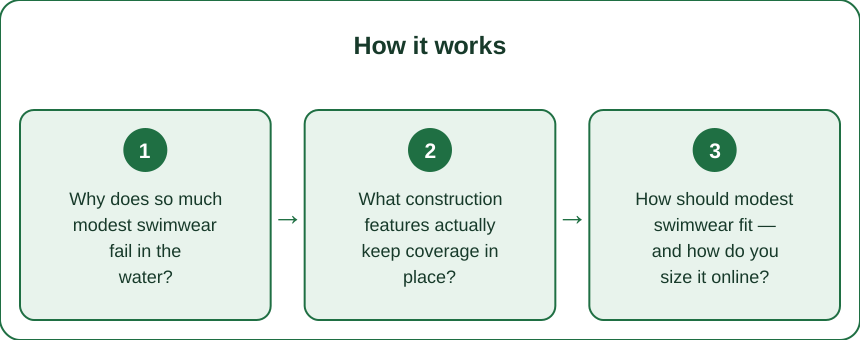
FAQ: Modest Swimwear Questions, Answered
Can I just swim in regular leggings and a rash guard?
For casual splash days, a chlorine-rated rash guard over swim-fabric leggings is a legitimate budget system — the key is that both pieces are nylon/polyester-spandex swim or surf fabric, not cotton workout leggings, which absorb water, go heavy, and can violate pool fabric rules. The dedicated modest-swim upgrade buys secured hems, attached layers, and opacity engineering.
How do I keep a swim hijab or head covering secure through actual swimming?
The designs that survive laps have an inner grip band or tie-back under-cap with the outer layer snapped or sewn to the suit’s neckline so it cannot lift independently. Pin-dependent arrangements and loose wraps belong on deck, not in water. Test with one full submersion and two turns before trusting it in public.
Is a burkini the same thing as a modest swimsuit?
Burkini is a common term for full-coverage swim systems — typically a longer tunic, leggings, and head covering — while the broader modest swim category spans everything from swim dresses with leggings to long-sleeve unitards. Construction rules are identical across the vocabulary: swim fabric, fitted base, secured edges.
Why is my modest suit see-through only in photos?
Flash and bright sun reveal what indoor mirrors miss — wet single-layer light fabric backlights easily. The fixes are the same as for opacity in general: dark colors, double-layer panels over the areas you care about, and the wet test at home (soak, stretch, photograph with flash) before any suit’s first public swim.
TL;DR:
- Water defeats land-designed modesty through float, cling, and drag — real modest swim is swimwear re-engineered for coverage, not loose clothes in swim fabric.
- The winning architecture is a snug swim-fabric base layer with a secured overlayer: elastic or snap hems, attached leggings under skirts, thumb loops, zip-entry necklines.
- Size the base like performance swimwear and put all the ease in the overlayer; dark colors and double layers own opacity when wet.
- Rinse after every swim, roll dry, replace seasonally under heavy chlorine — and buy next year’s suit at this month’s clearance prices.
Run tonight’s audit on this summer’s suit: did it float, cling, ride, or hold? Buy against the answer while the sales are still on, and next summer starts with swimwear that finally works as hard in the water as it looks on the deck.
See It in Motion
Seen here: High Waist Yoga Leggings with Inner Pocket — shop it on bubblelime.com
Keep Reading
This article is for general informational and styling purposes only. Fit, sizing, and product availability may vary.